
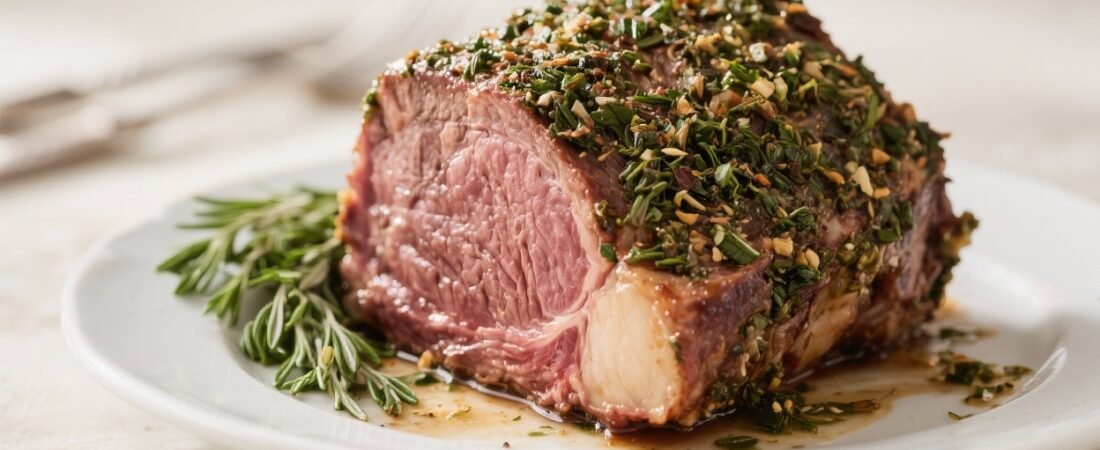
A perfectly roasted prime rib is the kind of dish that turns dinner into an occasion. It’s rich, tender, and naturally flavorful, so you don’t need to overthink it. With a crisp herb crust and a rosy interior, this roast delivers big results with simple steps.
The best part? Most of the work happens in the oven while your kitchen fills with incredible aromas. Whether it’s a holiday meal or a special Sunday dinner, this recipe sets the tone for a memorable gathering.
Why This Recipe Works
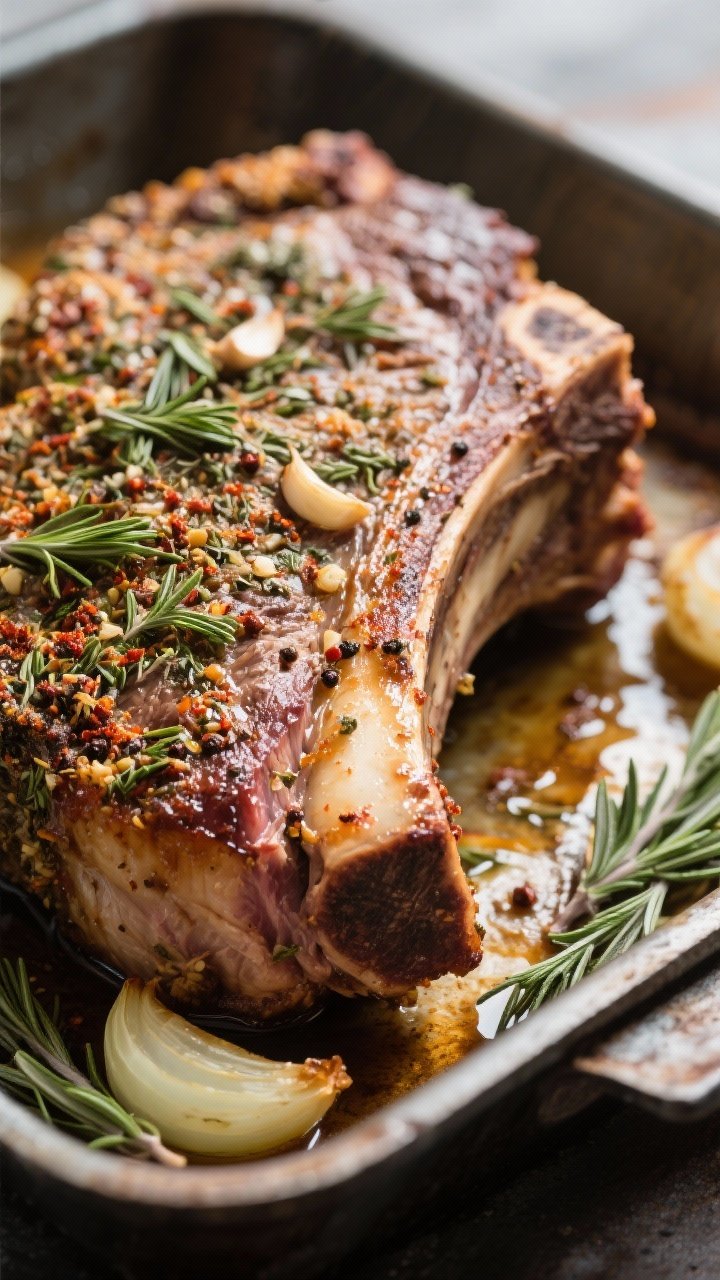
This method leans on a few reliable techniques that bring out the best in prime rib.
First, a generous herb rub creates a savory crust that seals in juices and adds bright, earthy flavor. Second, starting with a well-salted roast and letting it rest before cooking helps the meat season from within. Finally, a steady roast at moderate heat ensures even cooking and a tender result, while a short high-heat blast at the end locks in that golden crust.
What You’ll Need
- 1 bone-in prime rib roast (4–6 pounds; also called standing rib roast)
- Kosher salt and freshly ground black pepper
- 4–6 cloves garlic, minced
- 2 tablespoons fresh rosemary, finely chopped
- 2 tablespoons fresh thyme, finely chopped
- 1 tablespoon fresh parsley, finely chopped (optional for freshness)
- 2 teaspoons Dijon mustard
- 2 teaspoons whole-grain mustard (optional, for texture)
- 2–3 tablespoons olive oil
- 1 teaspoon smoked paprika (optional, for warmth and color)
- 1 teaspoon onion powder (optional)
- 1 cup beef stock (for the pan and quick jus)
- 1 small onion, quartered (for the roasting pan)
- Fresh herbs sprigs (rosemary, thyme) for the pan (optional)
- Equipment: roasting pan with rack, instant-read thermometer, carving knife
How to Make It
- Season ahead. Pat the roast dry and generously season all over with kosher salt and pepper.
Refrigerate uncovered for at least 8 hours and up to 24 hours. This dry brine builds flavor and helps the crust.
- Bring to room temp. Take the roast out of the fridge 1–2 hours before cooking. This helps it cook more evenly.
- Preheat and set the pan. Heat the oven to 450°F (230°C).
Place onions and herb sprigs in the roasting pan. Set a rack on top and position the roast bone-side down, fat cap up.
- Mix the herb crust. Stir together garlic, rosemary, thyme, parsley, Dijon, whole-grain mustard, olive oil, smoked paprika, and onion powder. It should be spreadable, not runny.
- Coat the roast. Rub the herb mixture all over the top and sides.
Press to help it adhere. Keep the bottom mostly bare so airflow circulates.
- Start hot. Roast at 450°F for 20 minutes to jump-start browning.
- Lower the heat. Reduce the oven to 325°F (165°C). Pour the beef stock into the bottom of the pan (not over the meat).
Continue roasting until the center hits your target temperature: 115–120°F for rare, 125°F for medium-rare, 135°F for medium. Expect about 15–20 minutes per pound after the initial sear, but trust your thermometer.
- Rest properly. Transfer the roast to a cutting board and tent loosely with foil for 20–30 minutes. Carryover heat will raise the temp by 5–10°F.
- Make a quick jus. Skim fat from the pan.
Set the pan over medium heat and scrape up browned bits. Add a splash of stock if needed. Simmer 3–5 minutes, season to taste.
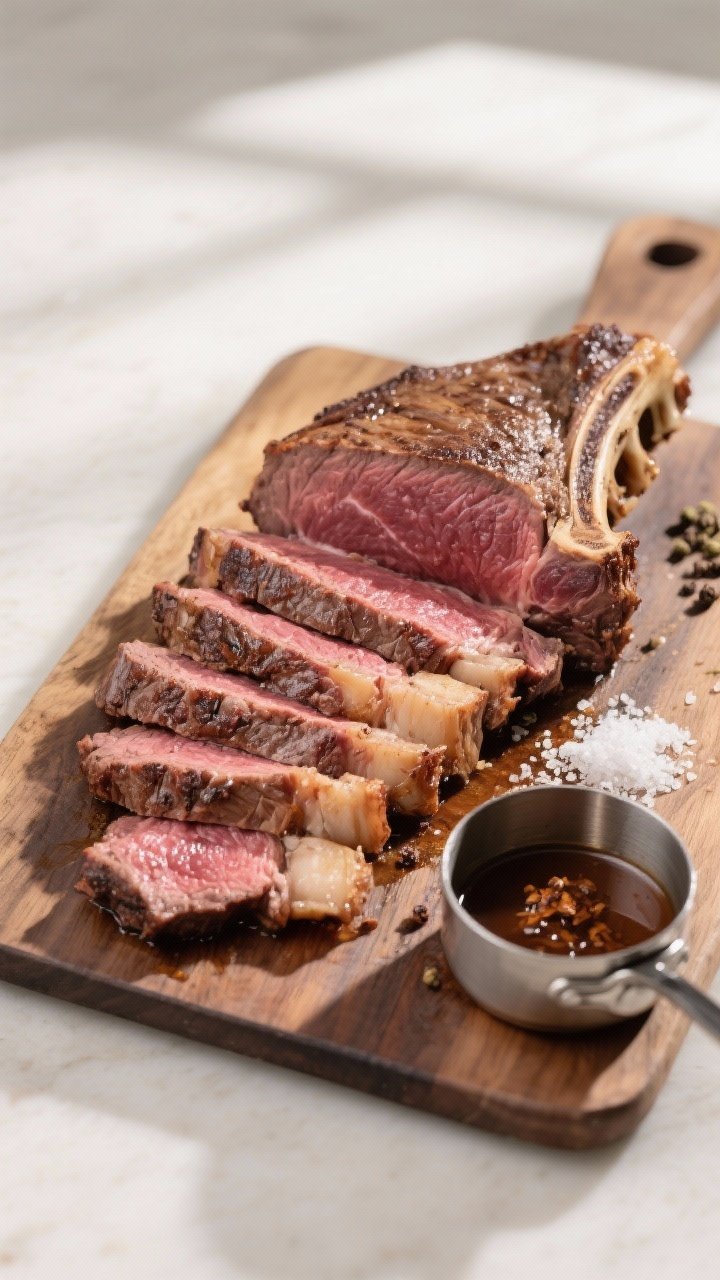
- Carve and serve. For a bone-in roast, slice along the bones to remove the roast as one piece, then slice into thick slabs.
Serve with pan jus.
Keeping It Fresh
Leftovers store well if cooled quickly and wrapped tightly. Refrigerate in airtight containers for up to 4 days. For longer storage, freeze slices with a bit of jus in freezer bags for up to 2 months.
To reheat gently, warm slices in a covered skillet with a splash of stock over low heat. This avoids drying and brings back tenderness.
Health Benefits
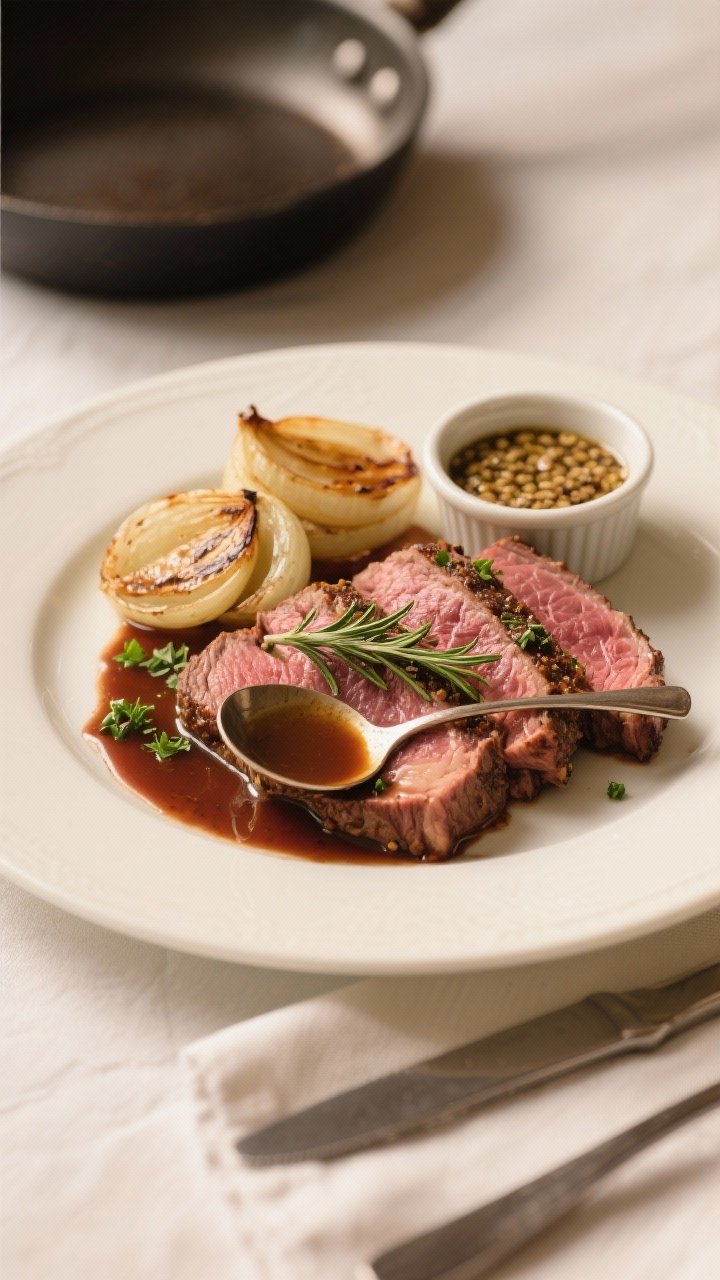
Prime rib is rich in protein, iron, zinc, and B vitamins, which support muscle repair, oxygen transport, and energy. The herb crust adds antioxidants and anti-inflammatory compounds from rosemary, thyme, garlic, and parsley.
Using olive oil keeps the fat profile friendlier than butter-heavy rubs. Pairing the roast with fiber-rich sides like roasted vegetables or a leafy salad rounds out the meal and supports digestion.
What Not to Do
- Don’t skip the salt-ahead step. It’s key for deep seasoning and a better crust.
- Don’t roast straight from the fridge. Cold meat cooks unevenly and can dry near the surface.
- Don’t rely on time alone. Ovens vary; use an instant-read thermometer for accuracy.
- Don’t slice right away. Resting keeps juices in the meat, not on the cutting board.
- Don’t drown the roast. Adding liquid over the meat softens the crust. Keep it in the pan beneath.
Alternatives
- Herb swap: Use sage, marjoram, or tarragon if you prefer.
Dried herbs work in a pinch—use about one-third the amount of fresh.
- Spice twist: Add crushed fennel seeds, black peppercorns, or a pinch of cayenne for a bolder crust.
- Butter crust: Replace olive oil with softened butter for a richer, more decadent finish.
- Boneless roast: Cook the same way on a rack. Expect slightly shorter cook time; still use a thermometer.
- Reverse-sear method: Roast low and slow at 250°F until 10°F shy of target, rest briefly, then sear at 500°F for 8–10 minutes to finish the crust.
- Pan sauce upgrade: Deglaze with red wine or brandy, then add a pat of butter to gloss the jus.
FAQ
How much prime rib should I buy per person?
Plan on about 1 pound per person for bone-in roasts (bones add weight), or 3/4 pound per person for boneless. For big eaters or minimal sides, add a little extra.
What internal temperature should I aim for?
For the best texture, aim for 125°F in the center for medium-rare before resting.
After rest, it will rise to about 130–135°F. Adjust to your preferred doneness using a reliable thermometer.
Do I need to tie the roast?
If it’s boneless, tying helps it cook evenly and hold a neat shape. Bone-in roasts often come tied by the butcher; if so, leave the twine on during roasting and remove before carving.
Can I make it without mustard?
Yes.
The mustard helps the herbs stick and adds subtle tang, but you can omit it or replace with a small splash of Worcestershire or a touch of horseradish.
How do I keep the crust from burning?
Watch the initial high-heat phase and lower the rack if needed. If the crust browns too quickly, tent loosely with foil during the lower-temperature roast.
What if my roast is larger than 6 pounds?
Time will increase, but the method stays the same. Expect roughly 15–20 minutes per pound at 325°F after the initial sear, and rely on temperature, not time.
Should I use a roasting rack?
Yes.
A rack lifts the roast so heat circulates evenly and the bottom doesn’t stew in juices. If you don’t have one, set the roast on thick onion slices or carrots.
Wrapping Up
This herb-crusted prime rib roast is all about smart seasoning, steady heat, and a good rest. With a flavorful crust and tender center, it feels special without being fussy.
Keep your thermometer handy, trust the process, and enjoy a centerpiece that never fails to impress.