
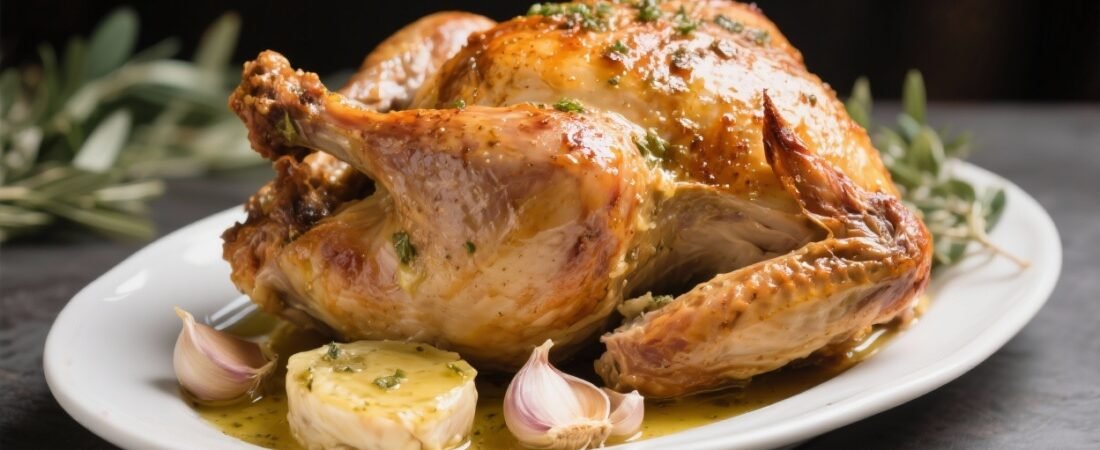
A great roast turkey should be juicy inside, golden outside, and full of flavor. This garlic butter version hits every mark without a lot of fuss. It leans on simple ingredients and a few smart techniques that make a big difference.
Whether it’s your first turkey or your fiftieth, this method is dependable and stress-friendly. The result is a centerpiece that tastes as good as it looks, with crisp skin and tender meat everyone will want seconds of.
What Makes This Recipe So Good
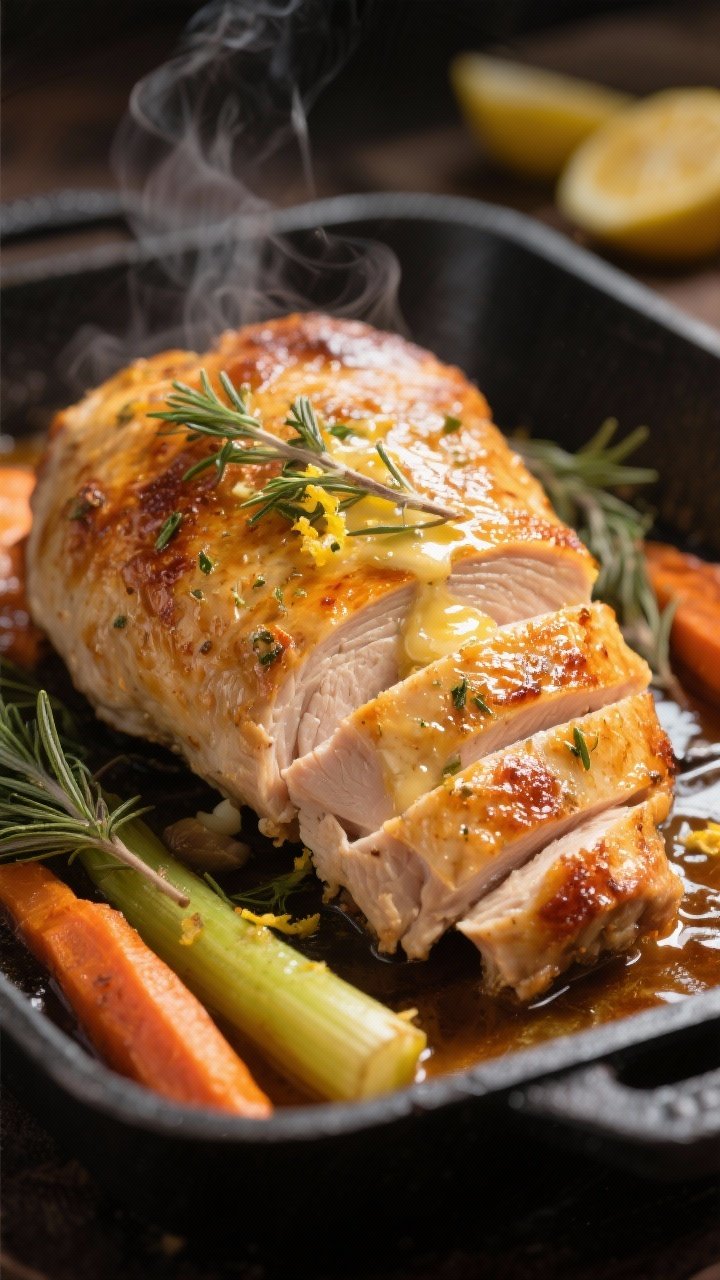
- Garlic butter under the skin keeps the breast meat moist and infuses flavor where it counts most.
- High-heat start, lower-heat finish gives you crispy skin without drying out the meat.
- Fresh herbs and citrus add depth without complicating the process.
- Simple pan drippings turn into an easy, rich gravy.
- Clear timing and temperatures reduce guesswork and help you serve on time.
What You’ll Need
- 1 whole turkey (12–14 pounds), thawed if frozen
- 1 cup (2 sticks) unsalted butter, softened
- 8–10 cloves garlic, finely minced or grated
- 2 teaspoons kosher salt (plus more for seasoning the bird)
- 1 teaspoon freshly ground black pepper
- 1 tablespoon fresh lemon zest
- 2 tablespoons fresh lemon juice
- 1 tablespoon fresh thyme leaves, chopped
- 1 tablespoon fresh rosemary, chopped
- 1 tablespoon fresh parsley, chopped
- 1 onion, quartered
- 1 lemon, halved
- 1 head garlic, halved crosswise
- 2–3 cups low-sodium chicken or turkey broth
- 2 carrots and 2 celery stalks, roughly chopped (optional, for the roasting pan)
- Olive oil, for rubbing
How to Make It
- Prep the turkey. Remove the turkey from the fridge 45–60 minutes before roasting so it roasts more evenly. Remove the giblets and neck.
Pat the turkey very dry, inside and out, with paper towels.
- Make the garlic butter. In a bowl, combine softened butter, minced garlic, kosher salt, black pepper, lemon zest, lemon juice, thyme, rosemary, and parsley. Mix until smooth and fragrant.
- Loosen the skin. Gently slide your fingers under the skin over the breast and thighs to create pockets. Be careful not to tear the skin.
- Butter under and over the skin. Spread about half the garlic butter under the skin, concentrating on the breast.
Spread the remaining butter over the skin. Lightly rub the turkey with a small drizzle of olive oil and sprinkle with additional salt and pepper.
- Stuff the cavity. Place the quartered onion, halved lemon, and halved garlic head inside the cavity. This perfumes the meat without making it soggy.
- Set up the pan. Scatter carrots and celery in a large roasting pan, if using, to create a bed.
Pour 2 cups broth into the pan. Place the turkey breast-side up on a rack over the pan. Tuck the wing tips under and tie the legs loosely with kitchen twine.
- Start hot. Preheat the oven to 425°F (220°C).
Roast the turkey at this temperature for 30 minutes to jumpstart browning.
- Lower the heat and continue. Reduce the oven to 325°F (165°C). Roast until the thickest part of the breast reaches 160°F and the thigh reaches 175°F, about 2.5–3 hours total for a 12–14 lb bird. Add more broth to the pan if it dries out.
Rotate the pan halfway for even browning.
- Tent if needed. If the skin is getting too dark before the meat is done, tent loosely with foil. Don’t crimp it tightly or you’ll steam the skin.
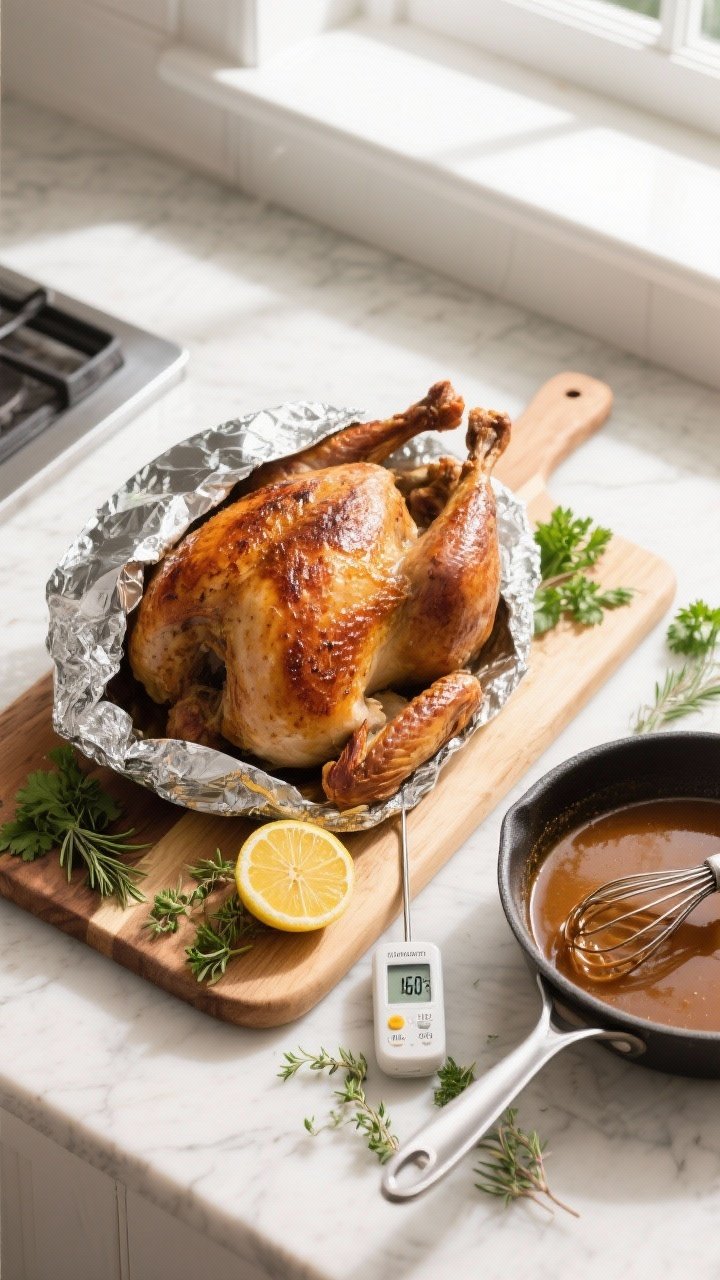
- Rest the turkey. Transfer the turkey to a cutting board and let it rest, tented with foil, for 30–40 minutes. The temperature will rise a few degrees as it rests, and the juices will redistribute.
- Make a quick gravy (optional but recommended). Skim off excess fat from the pan drippings, leaving about 3 tablespoons.
Place the pan over medium heat, whisk in 3 tablespoons flour, cook 1 minute, then slowly whisk in 2–3 cups broth until smooth. Simmer until thickened. Season to taste.
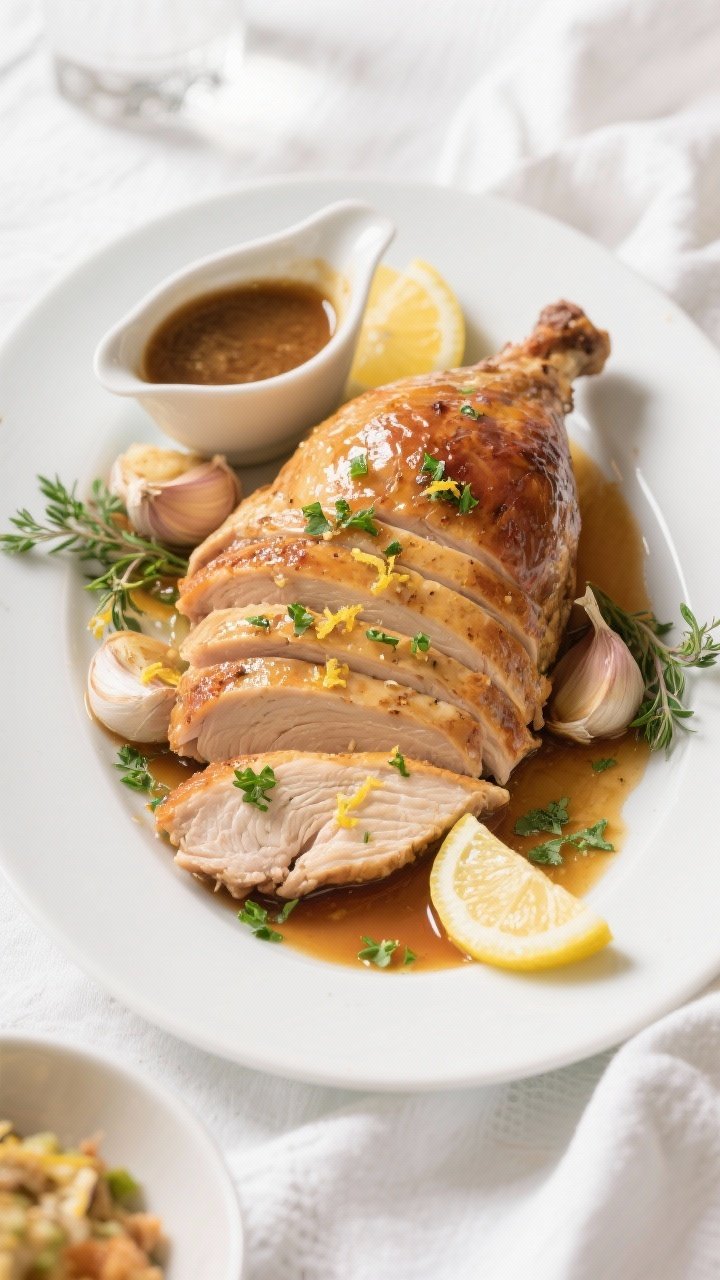
- Carve and serve. Remove the legs and thighs, then the breasts.
Slice across the grain. Serve with warm gravy and your favorite sides.
Keeping It Fresh
- Storage: Refrigerate leftover turkey in shallow containers within 2 hours. It keeps well for 3–4 days.
- Freezing: Slice the meat and wrap it tightly.
Freeze up to 3 months. Thaw overnight in the fridge.
- Reheating: Warm slices in a covered dish with a splash of broth at 300°F until heated through. This keeps it moist.
- Use the bones: Simmer the carcass with onion, celery, and carrots for a rich stock.
It’s perfect for soup or gravy.
Why This is Good for You
- Lean protein: Turkey is naturally lean, especially the breast, and it’s packed with protein for satiety and muscle support.
- Healthy fats in moderation: Butter adds richness and helps absorb fat-soluble nutrients. You can control the amount to suit your goals.
- Herbs and garlic: Garlic and fresh herbs bring antioxidants and anti-inflammatory compounds, plus big flavor without extra sodium.
- Balanced meal potential: Pair with roasted vegetables and a whole-grain side to create a satisfying, nutrient-dense plate.
Pitfalls to Watch Out For
- Roasting a partially frozen bird: This leads to uneven cooking. Make sure it’s fully thawed.
A 12–14 lb turkey needs about 3 days in the fridge.
- Tearing the skin: Go slow when loosening it. If it tears, patch butter over the area to help it brown evenly.
- Overcooking the breast: Use a reliable instant-read thermometer and pull the turkey when the breast hits 160°F.
- Skipping the rest: Slicing too soon releases the juices. Resting is non-negotiable for moist meat.
- Too little seasoning: Salt the exterior generously.
The turkey is big; it needs more than you think.
Alternatives
- Herb variations: Swap in sage or tarragon. Dried herbs work too—use one-third the amount of fresh.
- Dairy-free: Replace butter with a good olive oil or dairy-free butter. The method remains the same.
- Citrus twist: Orange zest and juice give a slightly sweeter, holiday vibe.
- Dry brine: The day before, rub 1 tablespoon kosher salt per 5 pounds of turkey all over and under the skin.
Refrigerate uncovered. This boosts flavor and crispness.
- Spatchcocked: Remove the backbone and flatten the turkey. It cooks faster (about 90 minutes) and more evenly with extra-crisp skin.
FAQ
How long should I thaw a frozen turkey?
Plan on about 24 hours in the fridge for every 4–5 pounds.
A 12–14 pound turkey needs 3 days. Keep it on a tray to catch any drips.
Do I need to baste?
Not really. The garlic butter and initial high heat do most of the work.
If you enjoy basting, do it only a couple of times to avoid losing oven heat.
Can I dry brine and still use garlic butter?
Yes. Dry brine 24–48 hours ahead, then reduce the salt in the garlic butter by half. Proceed as written.
What if I don’t have fresh herbs?
Use dried: 1 teaspoon each of dried thyme and rosemary, and 1/2 teaspoon dried parsley.
Rub them between your fingers to release oils.
How do I know it’s done without overcooking?
Use an instant-read thermometer. Look for 160°F in the thickest part of the breast and 175°F in the thigh, avoiding the bone. Rest 30–40 minutes before carving.
Can I cook stuffing inside the turkey?
It’s safer and easier to bake stuffing separately.
If you do stuff the bird, make sure the center of the stuffing hits 165°F, but note it may extend cooking time and risk dryness.
My skin isn’t crisp. What happened?
The turkey may have been too wet or tented too tightly. Next time, dry the skin very well, start hot at 425°F, and avoid sealing it with foil.
A final 5–10 minutes at 425°F can help crisp it up, if needed.
In Conclusion
This Garlic Butter Roast Turkey keeps things simple while delivering big flavor and perfect texture. The garlic-herb butter protects the meat, the heat strategy gives you crisp skin, and the pan drippings make an easy gravy. Follow the temperatures, let it rest, and carve with confidence.
It’s a reliable, crowd-pleasing centerpiece you can count on every time.