
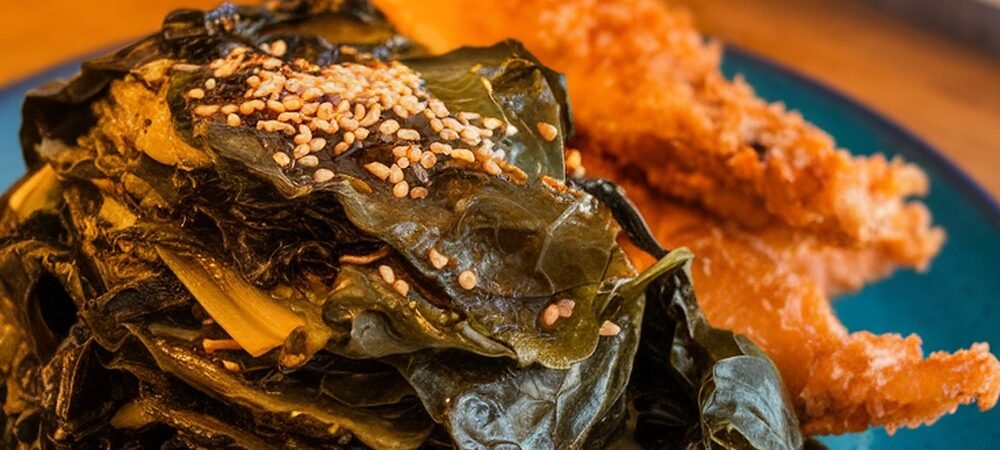
Collard greens are a hearty leafy green vegetable, packed with nutrients and flavor. Often associated with Southern cooking, they bring a bold taste and a bit of crunch to a variety of dishes. Cooked low and slow or served fresh, collard greens are not just healthy—they’re also versatile and delicious!
Collard Greens in Global Cuisines
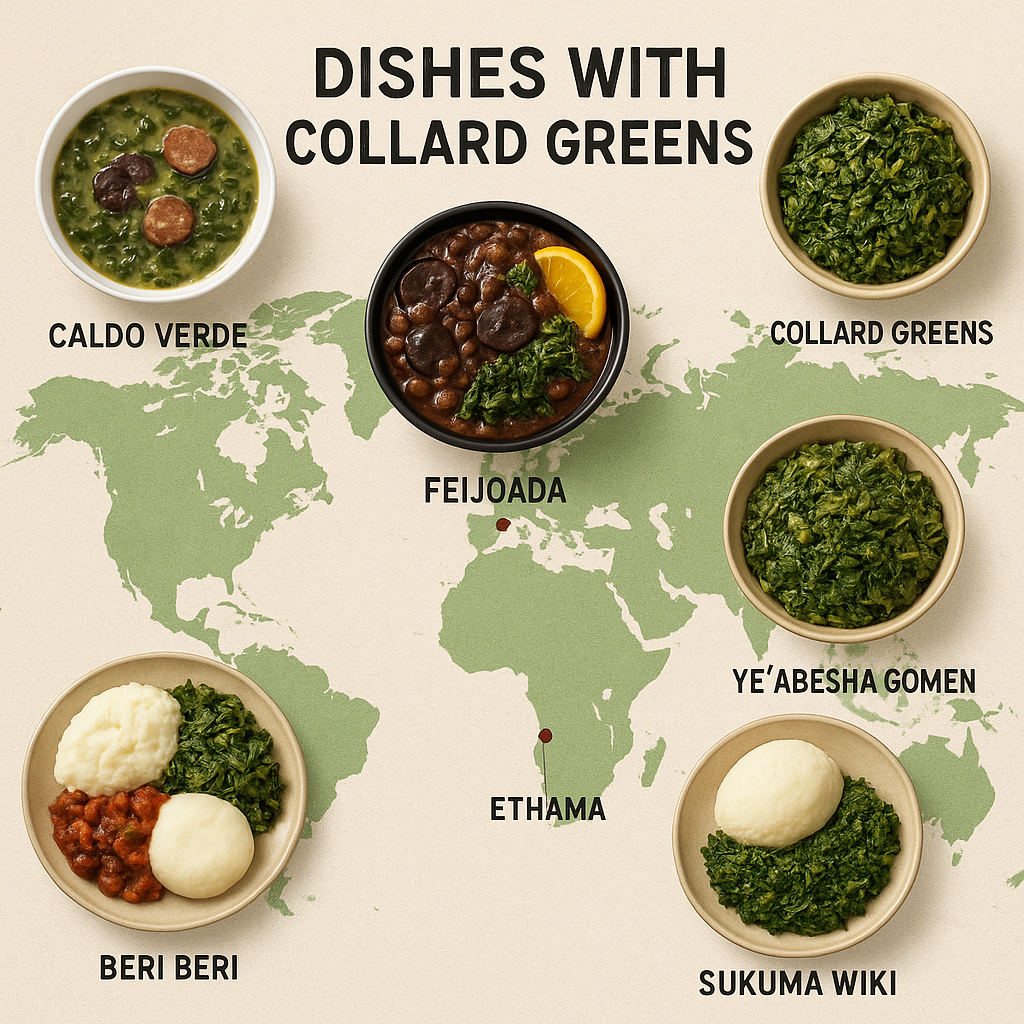
Collard greens are a leafy green vegetable that have found their way into many global cuisines. This image showcases a map highlighting various regions where collard greens are popular, along with dishes that feature them.
In the southern United States, collard greens are often cooked with smoked meat, creating a hearty side dish. They are a staple in soul food and are enjoyed for their rich flavor and nutritional benefits.
Across the Atlantic, in parts of Africa, collard greens are commonly used in stews and soups. They add a nutritious element to dishes that are often served with rice or cornmeal.
In Europe, particularly in Mediterranean countries, collard greens can be found in salads or sautéed with garlic and olive oil. This versatility makes them a favorite among health-conscious eaters.
The image also features bowls of collard greens dishes, showing how they can be prepared in different styles. Whether in a stew or as a side, collard greens bring a unique taste to any meal.
Nutritional Benefits of Collard Greens
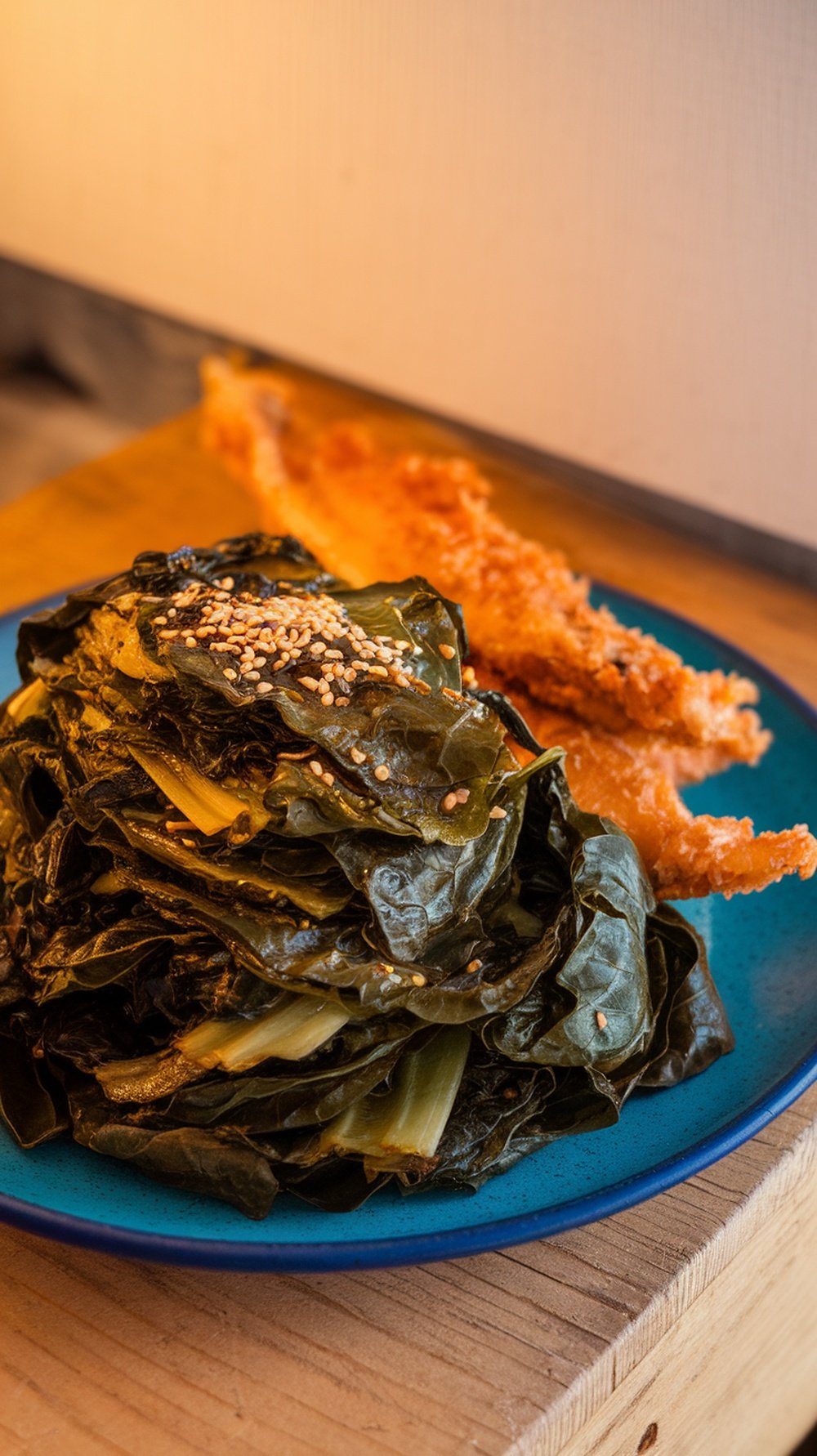
Collard greens are a fantastic leafy green packed with nutrients. They are often served cooked, as seen in the image, where they are beautifully presented with a sprinkle of sesame seeds. This dish not only looks appetizing but also offers a wealth of health benefits.
One of the standout features of collard greens is their high vitamin K content. This vitamin plays a key role in bone health and blood clotting. Just a cup of cooked collard greens can provide more than the daily requirement of vitamin K!
Collard greens are also rich in vitamins A and C. Vitamin A supports eye health, while vitamin C boosts the immune system. Eating collard greens regularly can help keep your body strong and healthy.
These greens are a great source of fiber, which aids digestion and helps maintain a healthy weight. Plus, they are low in calories, making them a perfect addition to any meal.
Incorporating collard greens into your diet can be simple. You can sauté them with garlic and olive oil or add them to soups and stews. They pair well with a variety of dishes, enhancing both flavor and nutrition.
Growing Collard Greens at Home
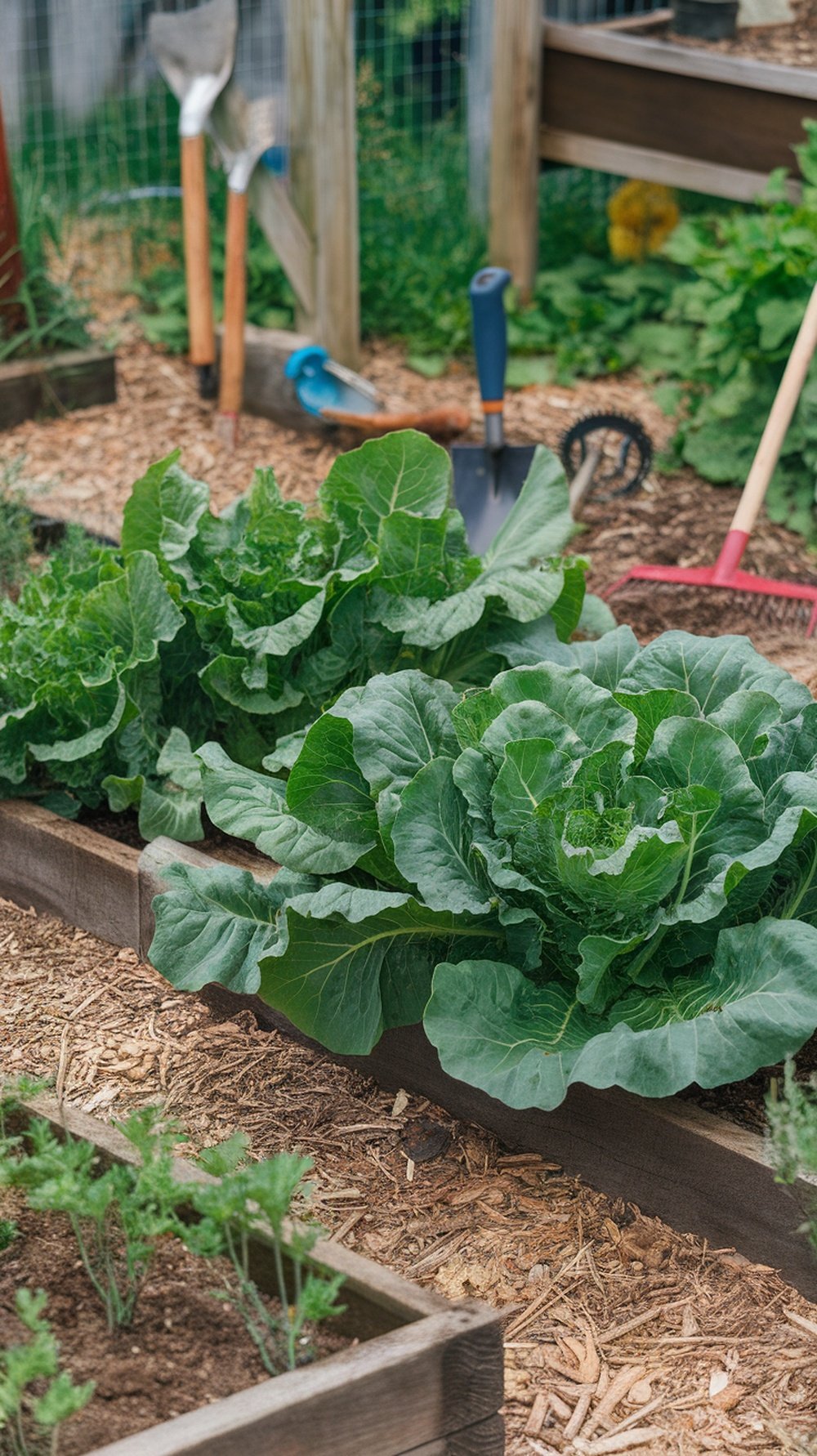
Growing collard greens at home is a rewarding experience. These leafy greens thrive in various conditions and are packed with nutrients. In the image, you can see healthy collard greens flourishing in a garden bed, surrounded by tools that hint at the care taken to cultivate them.
Collard greens prefer cooler weather, making them perfect for spring and fall planting. They need well-drained soil rich in organic matter. You can easily prepare your garden bed by mixing in compost or aged manure.
When planting, space the seeds or seedlings about 12 to 18 inches apart. This gives them room to grow large and leafy. Regular watering is key, especially during dry spells. Aim for consistent moisture without waterlogging the soil.
As they grow, keep an eye out for pests like aphids or cabbage worms. Handpicking them off or using organic pest control can help keep your greens healthy. Harvesting collard greens is simple; just cut the outer leaves, allowing the inner ones to continue growing.
Enjoy your homegrown collard greens in salads, soups, or sautéed with garlic. They add a nutritious touch to any meal!
Pairing Collard Greens with Proteins
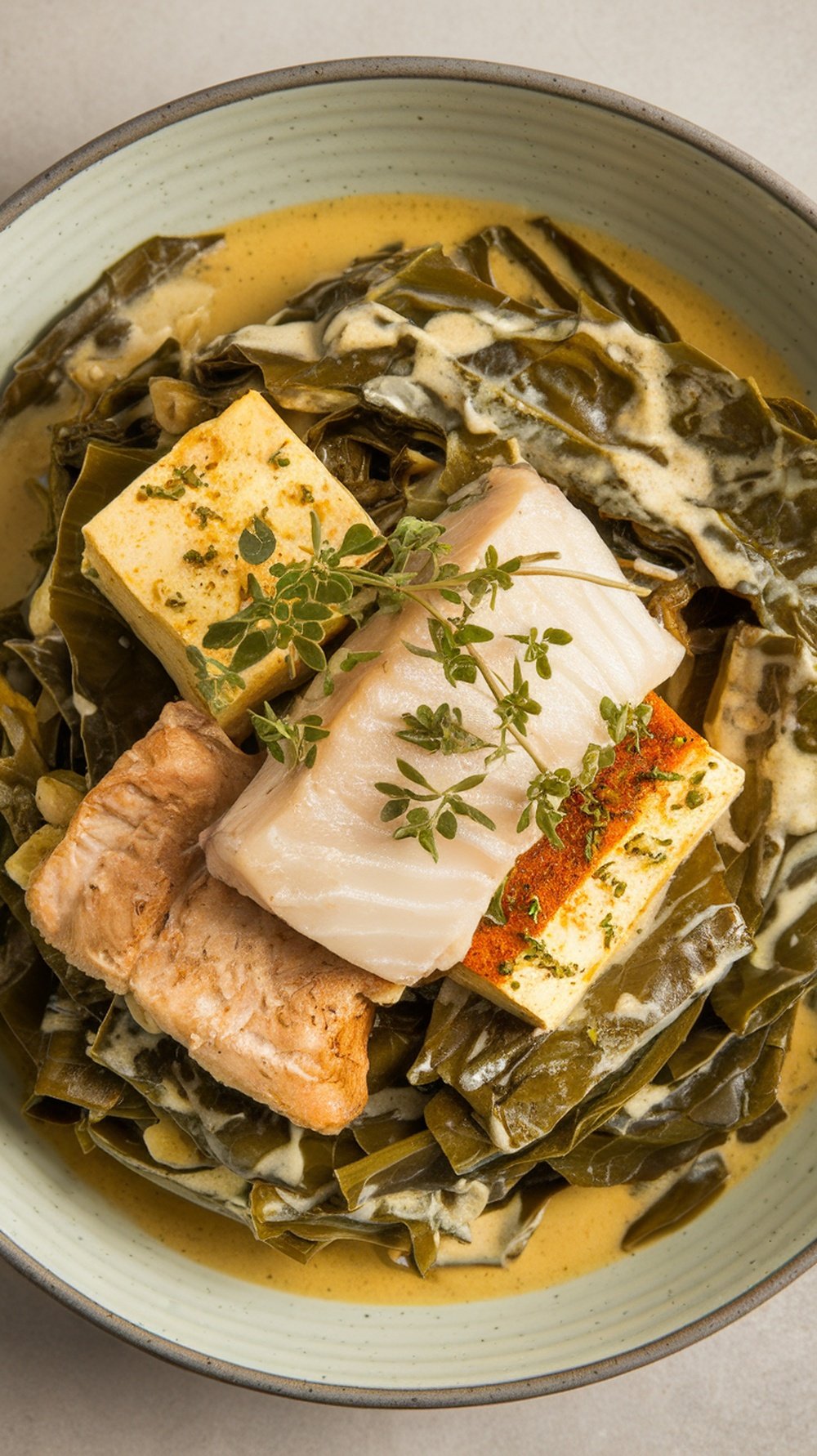
Collard greens are a fantastic leafy green that brings a hearty flavor to any dish. When you pair them with proteins, you create a balanced meal that’s both satisfying and nutritious. In the image, you can see a delicious bowl featuring collard greens topped with various proteins like fish and tofu, all swimming in a creamy sauce.
Fish is a great option to pair with collard greens. The lightness of the fish complements the robust flavor of the greens. You can use salmon or cod, as they both add a nice richness. Tofu is another excellent choice, especially for those looking for a plant-based protein. It absorbs flavors well and adds a nice texture.
To make this dish, start by sautéing the collard greens until they’re tender. Then, cook your protein of choice. If you’re using fish, a simple seasoning of salt, pepper, and lemon juice works wonders. For tofu, marinating it in soy sauce or your favorite spices can enhance its flavor. Combine everything in a bowl, and you have a delightful meal ready to enjoy!
Collard Greens and Their Cultural Significance
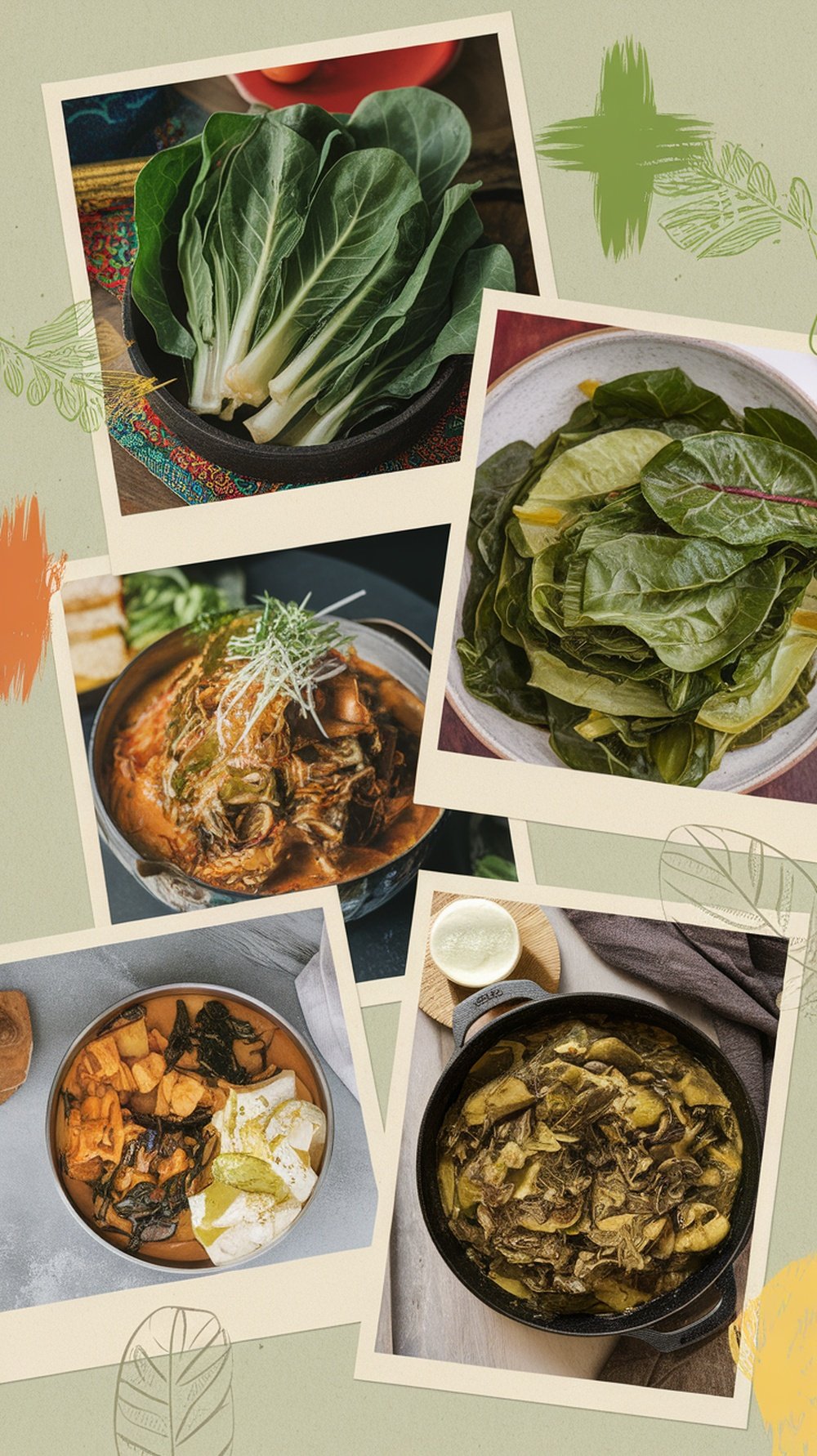
Collard greens are more than just a leafy green vegetable; they hold a special place in many cultures, especially in Southern cuisine. These robust greens are often enjoyed in various dishes, showcasing their versatility and rich flavor.
The image captures collard greens in different forms. Fresh greens are vibrant and inviting, while cooked dishes reveal how they can be transformed into comforting meals. From stews to side dishes, collard greens bring warmth and satisfaction to the table.
In many communities, collard greens symbolize resilience and tradition. They are often served during gatherings and celebrations, connecting generations through shared recipes and stories. This cultural significance makes them a staple in many households.
Whether sautéed with garlic or simmered in broth, collard greens are a delicious way to honor culinary heritage. They remind us of the importance of food in bringing people together and preserving cultural identity.
Creative Collard Greens Salads
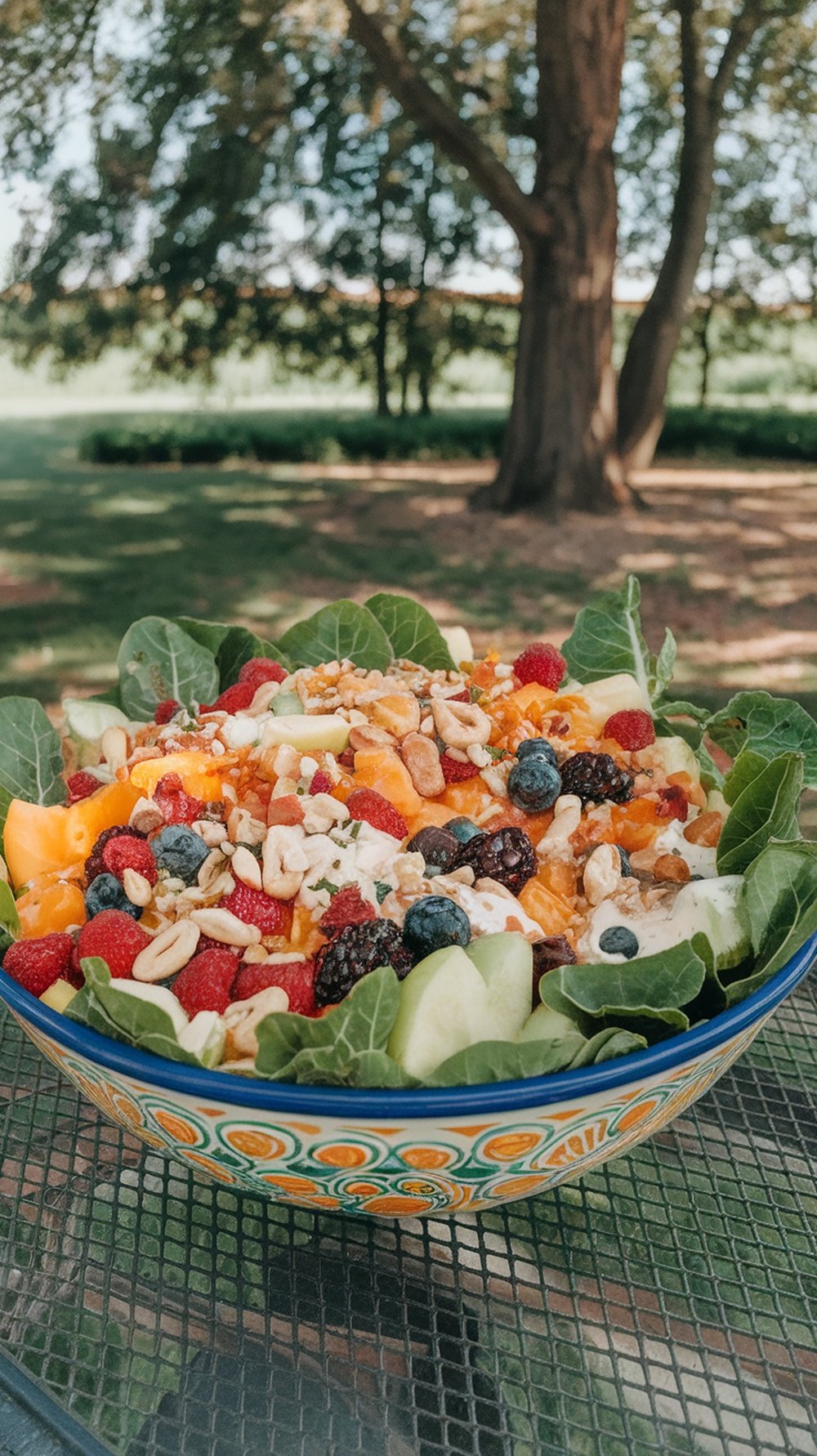
Collard greens are often seen as a hearty side dish, but they can shine in salads too! Imagine a vibrant bowl filled with fresh collard greens, topped with a mix of colorful fruits and crunchy nuts. This salad is not just a feast for the eyes; it’s packed with nutrients.
In the image, you can see a beautiful salad featuring collard greens as the base. The greens are adorned with juicy mango, sweet raspberries, and blueberries, creating a delightful contrast. Nuts add a satisfying crunch, making each bite enjoyable.
To make this salad, start with fresh collard greens. Wash and chop them, then layer them in a bowl. Next, add your favorite fruits like diced mango, berries, and even some sliced apples for extra sweetness. Top it off with a handful of nuts for that perfect crunch. A light dressing, perhaps a simple vinaigrette, can tie all the flavors together.
This salad is perfect for summer picnics or as a refreshing side at any meal. It’s a fun way to enjoy collard greens while getting a variety of flavors and textures. Give it a try, and you might just find a new favorite!
Cooking Techniques for Perfect Collard Greens
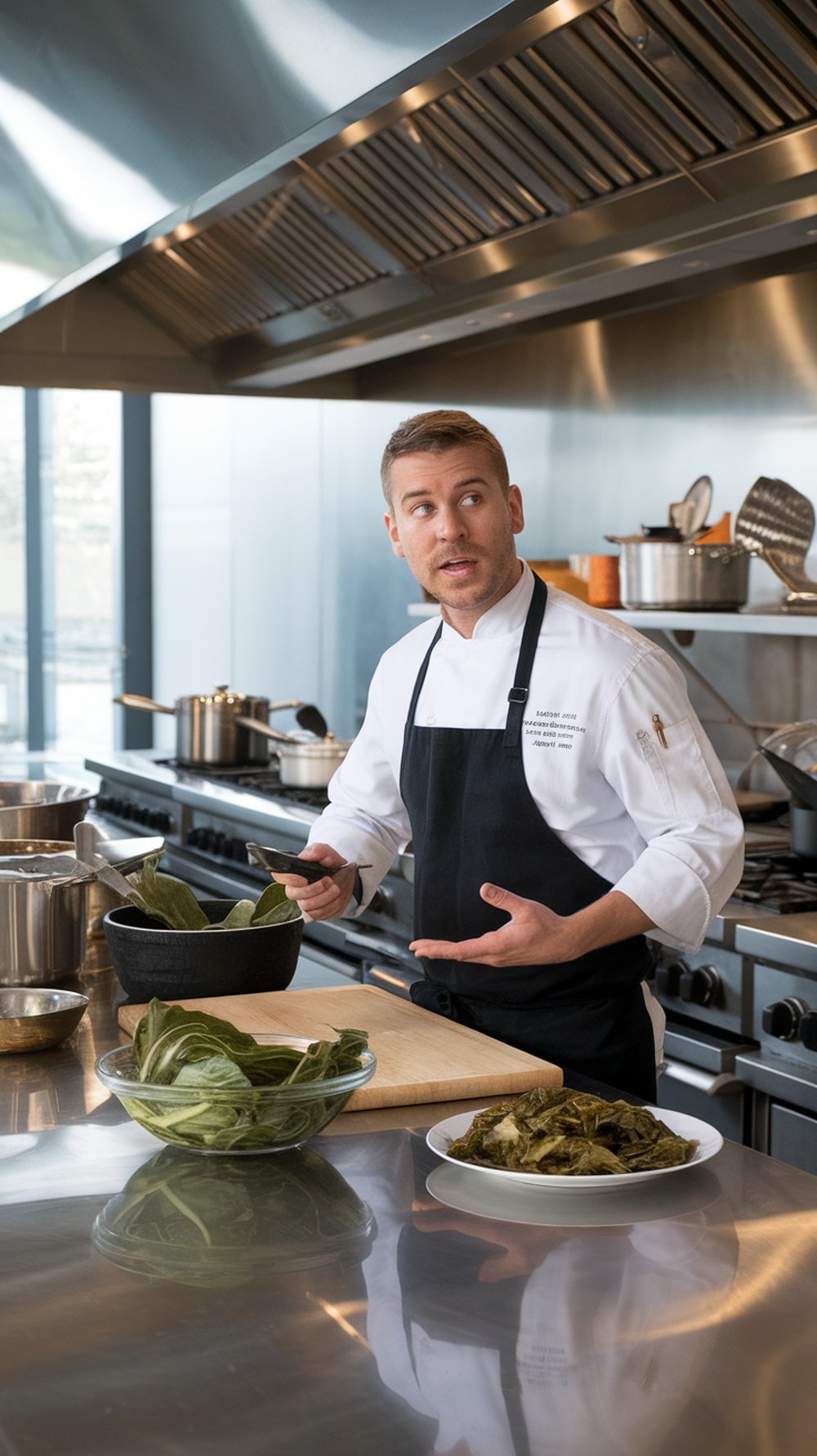
Collard greens are a staple in Southern cooking, known for their rich flavor and nutritional benefits. In the kitchen, the right techniques can make all the difference in achieving tender, tasty greens.
Start by washing the collard greens thoroughly to remove any dirt. Once clean, remove the tough stems. You can do this by folding the leaves in half and slicing along the stem. This step is key to ensuring a pleasant texture.
Next, consider your cooking method. Boiling is a classic approach. Simply add the greens to a pot of salted water and cook until they soften, usually around 30 minutes. For a deeper flavor, try sautéing them with garlic and onion in olive oil. This method brings out their natural sweetness.
Another option is to braise the greens. This involves cooking them slowly in a bit of broth or water, allowing them to absorb flavors. Add spices like red pepper flakes or vinegar for an extra kick. The goal is to achieve a balance of tenderness and flavor.
Finally, serve your collard greens hot, perhaps alongside cornbread or your favorite protein. Enjoy the hearty, comforting taste of this beloved dish!
Traditional Southern Collard Greens Recipe
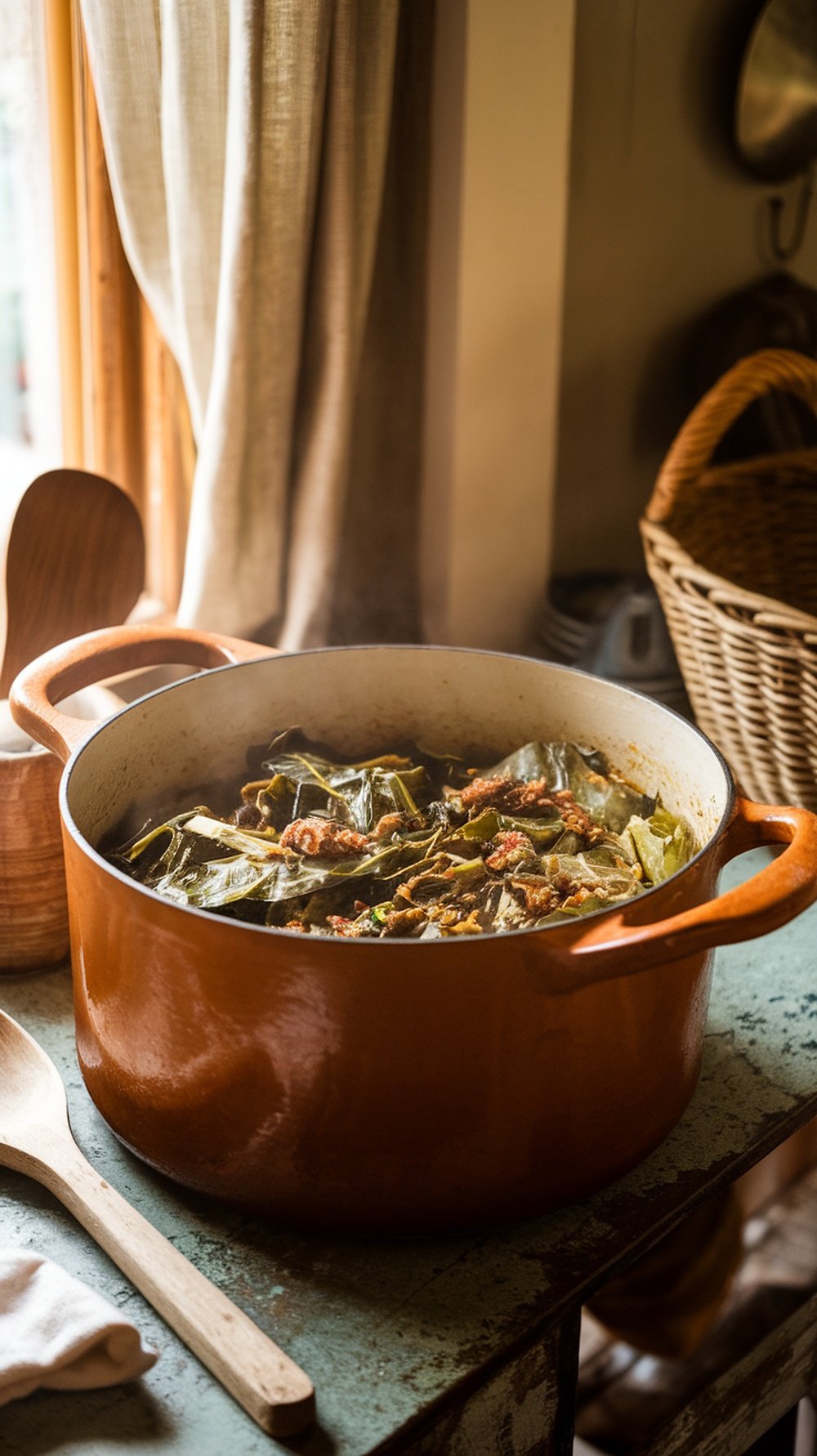
Collard greens are a staple in Southern cooking, often served as a side dish that brings warmth and comfort to any meal. The image shows a pot of collard greens simmering away, releasing a delicious aroma that fills the kitchen. The rich green leaves are tender and infused with flavors, making them a perfect addition to any Southern feast.
To make traditional Southern collard greens, you’ll need fresh collard greens, smoked meat (like ham hocks or bacon), onion, garlic, and some spices. Start by washing the greens thoroughly and chopping them into bite-sized pieces. In a large pot, sauté chopped onions and garlic until they’re fragrant. Add the smoked meat and let it cook for a bit to release its flavor.
Next, toss in the collard greens and cover them with water or broth. Season with salt, pepper, and a splash of vinegar for that extra zing. Let everything simmer for about an hour until the greens are tender and the flavors meld together. Serve them hot, and enjoy the hearty goodness!
Storing and Preserving Collard Greens
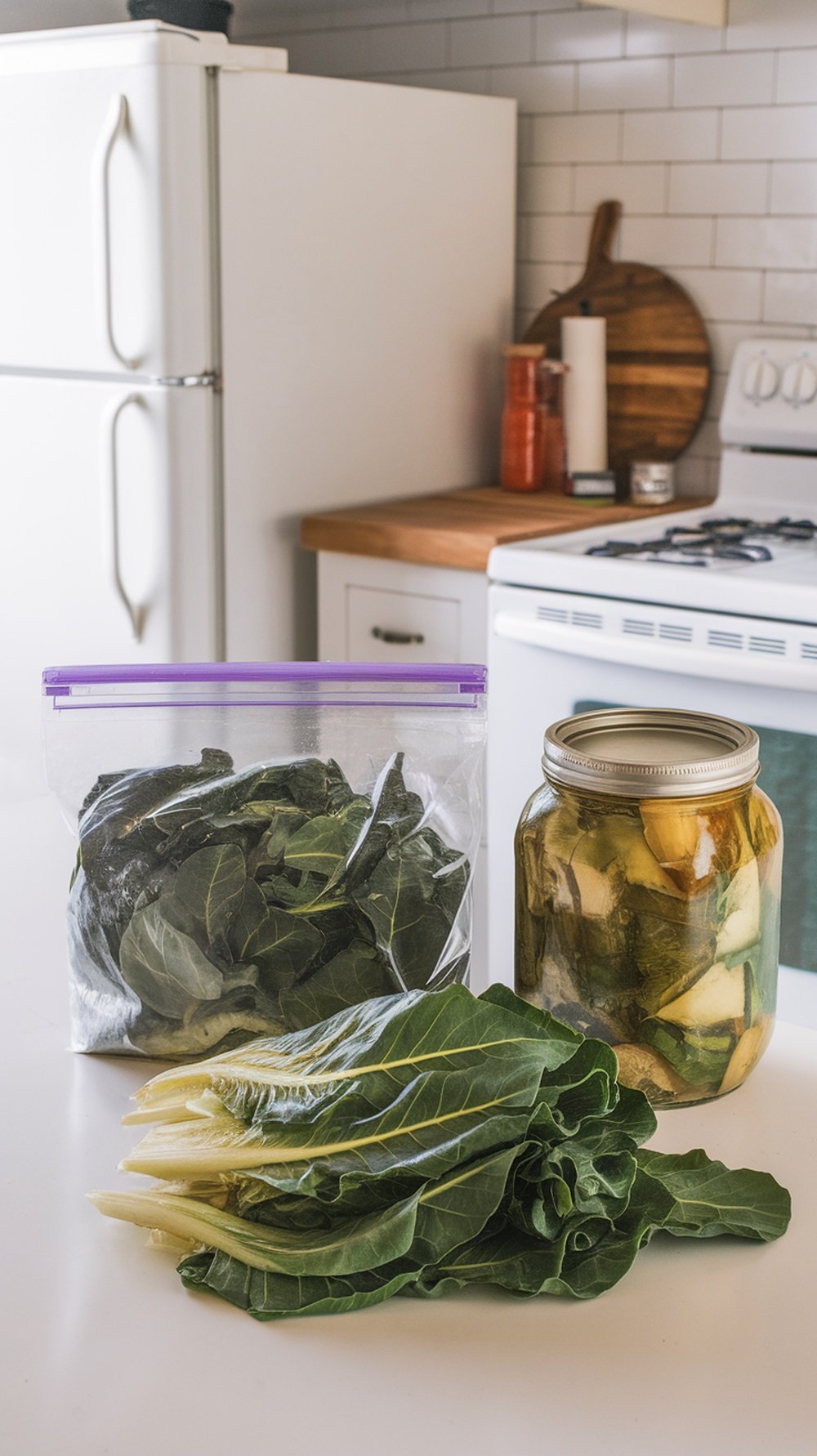
Collard greens are a nutritious and versatile leafy green that can enhance many dishes. Proper storage is key to keeping them fresh and flavorful. In the image, you see collard greens in different forms: fresh leaves, a bag of dried greens, and a jar of preserved greens. Each method has its benefits.
Fresh collard greens should be stored in the refrigerator. Place them in a plastic bag to keep moisture in, but make sure to remove excess air. This helps them stay crisp for about a week. If you notice any wilting, use them quickly in a stir-fry or soup.
Dried collard greens, like those in the bag, can last much longer. Dehydrating them removes moisture, which prevents spoilage. You can rehydrate dried greens by soaking them in water before cooking. This method is great for long-term storage.
The jar of preserved greens shows another popular option: pickling. This method adds flavor and extends shelf life. Simply pack the greens in a jar, cover them with a vinegar solution, and store them in the fridge. Pickled collard greens can add a tangy twist to salads and sandwiches.
Healthier Alternatives to Traditional Collard Greens Dishes
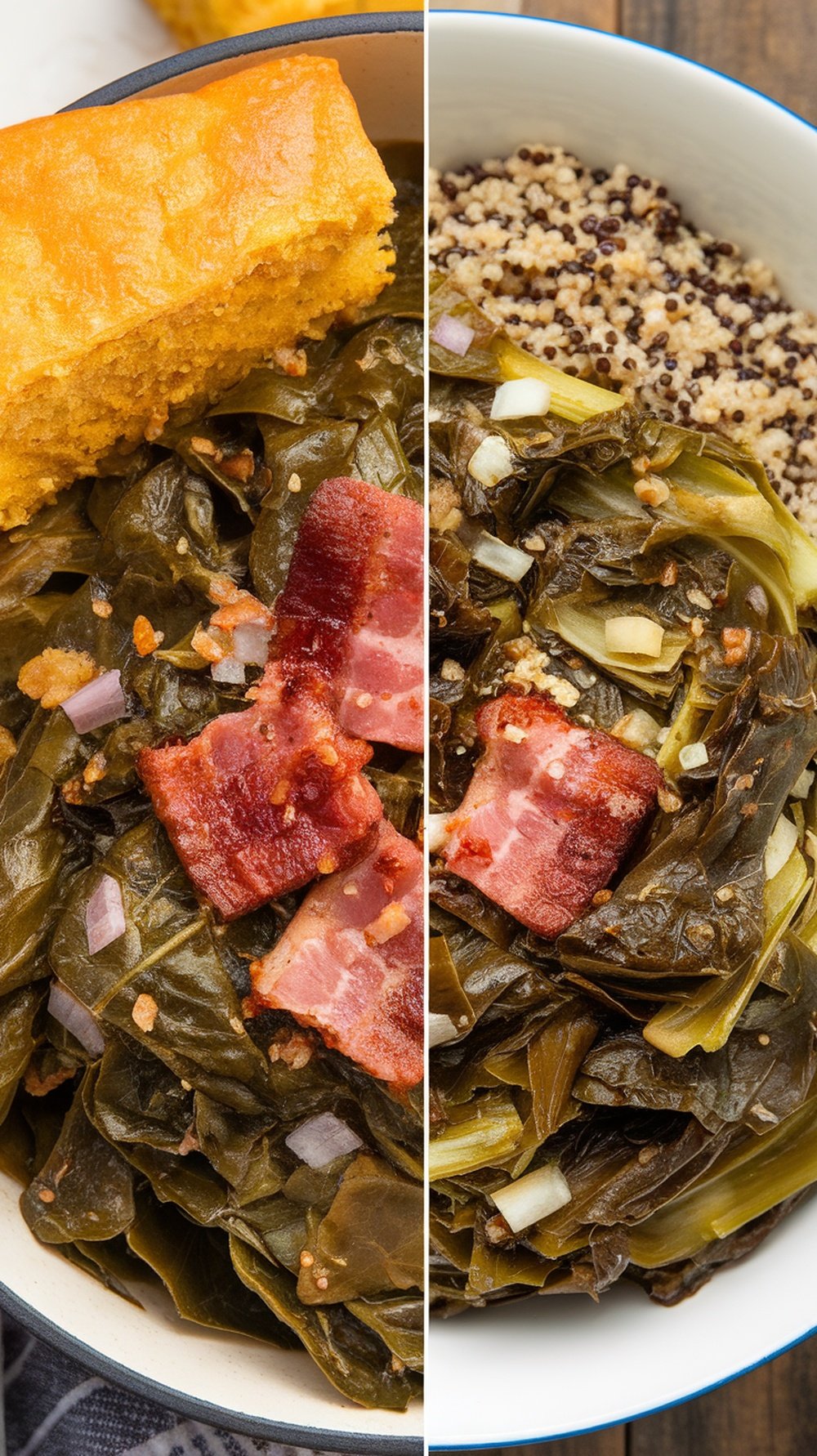
Collard greens are a staple in many Southern kitchens, often served with rich flavors and hearty ingredients. The image shows a traditional dish with collard greens topped with bacon and served alongside cornbread. On the other side, there’s a lighter version featuring collard greens with quinoa, showcasing a healthier twist.
Switching up ingredients can make a big difference. Instead of using bacon, try sautéing collard greens with garlic and olive oil. This keeps the dish flavorful while cutting down on fat. You can also add nuts or seeds for a crunchy texture.
Quinoa is a fantastic alternative to cornbread. It’s packed with protein and fiber, making it a nutritious side. Mixing cooked quinoa with collard greens can create a filling meal that’s both satisfying and healthy.
Experimenting with spices can also enhance the flavor without adding extra calories. A sprinkle of red pepper flakes or a dash of vinegar can brighten up the dish. These small changes can transform traditional collard greens into a healthier option that everyone will enjoy.