
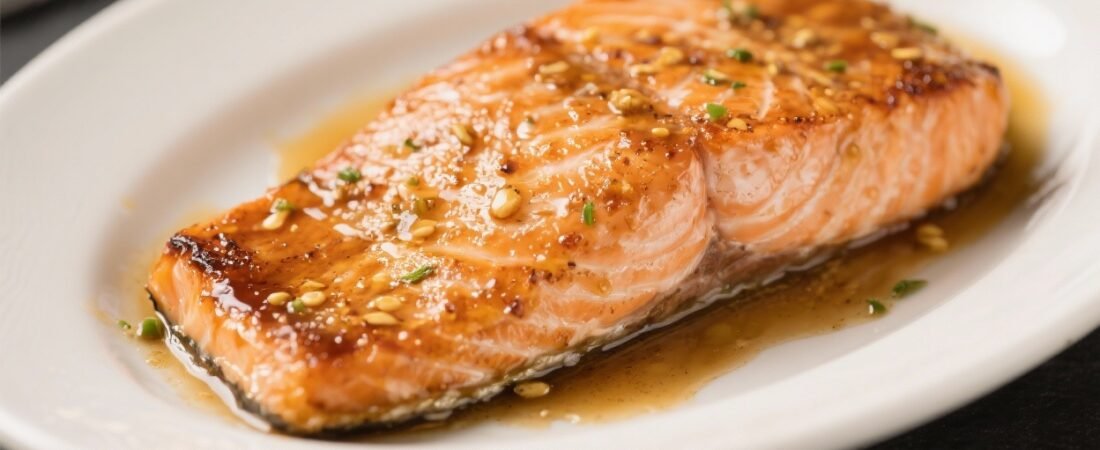
This is the kind of recipe that makes dinner feel special without taking over your evening. Maple and mustard sound fancy together, but the flavor is familiar and comforting: sweet, tangy, and a little sharp. Salmon soaks up the glaze, stays juicy, and finishes with a glossy, caramelized top.
Pair it with roasted veggies, rice, or a crisp salad, and you’ve got a balanced meal with minimal effort. It’s reliable, fast, and loved by anyone who appreciates bold flavor that doesn’t try too hard.
What Makes This Recipe So Good
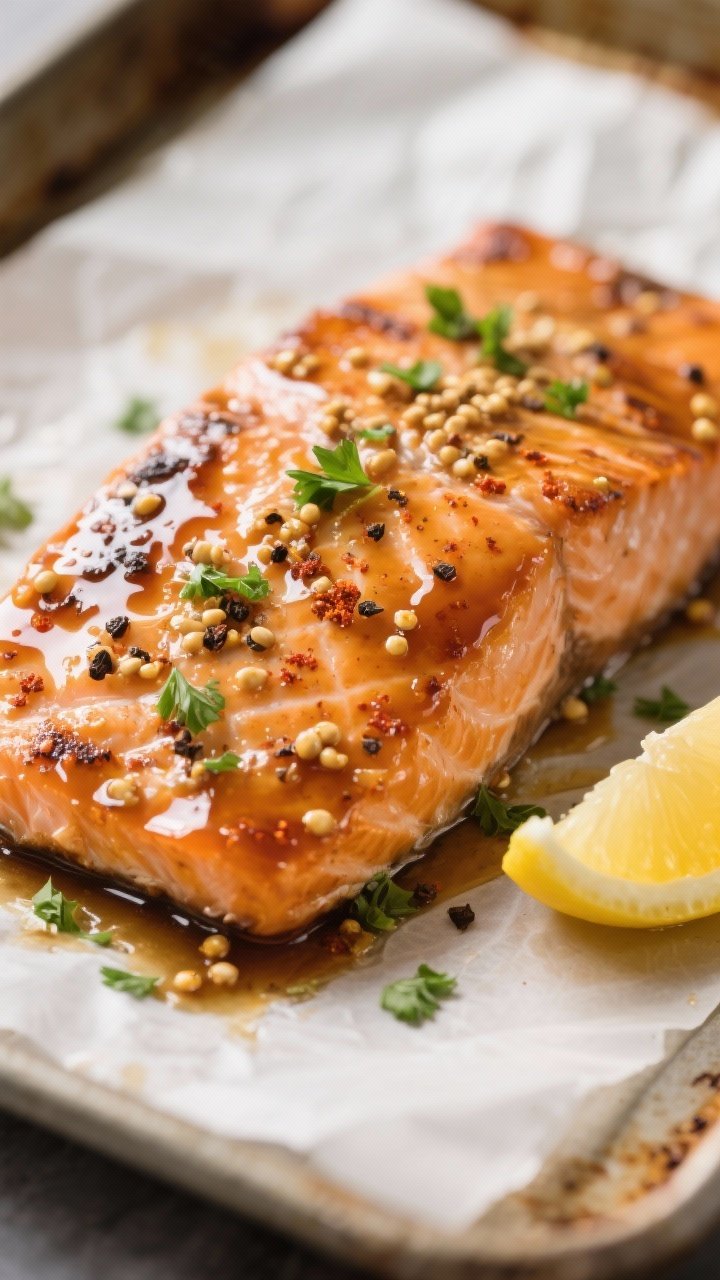
- Balanced flavors: The maple syrup brings gentle sweetness, while Dijon mustard adds tang and heat. Garlic and lemon round it out for a clean finish.
- Quick and simple: The glaze mixes in a minute, and the salmon cooks in under 15 minutes.
It’s perfect for busy weeknights.
- Consistently juicy: A short cook at a high temperature keeps the salmon tender and flaky, not dry.
- Meal-prep friendly: Leftovers reheat well and work in grain bowls, tacos, or salads.
- Flexible: Works with fillets or a whole side of salmon. You can bake, broil, or grill depending on your mood.
Ingredients
- 4 salmon fillets (about 6 ounces each), skin-on or skinless
- 2 tablespoons Dijon mustard
- 1 tablespoon whole-grain mustard (optional, for texture)
- 3 tablespoons pure maple syrup
- 1 tablespoon fresh lemon juice
- 1 tablespoon olive oil
- 1 teaspoon soy sauce or tamari (optional, for depth)
- 1 garlic clove, finely minced
- 1/2 teaspoon smoked paprika (or regular paprika)
- 1/4 teaspoon crushed red pepper flakes (optional, for heat)
- Kosher salt and freshly ground black pepper, to taste
- Lemon wedges, for serving
- Fresh parsley or chives, chopped (optional, for garnish)
Instructions
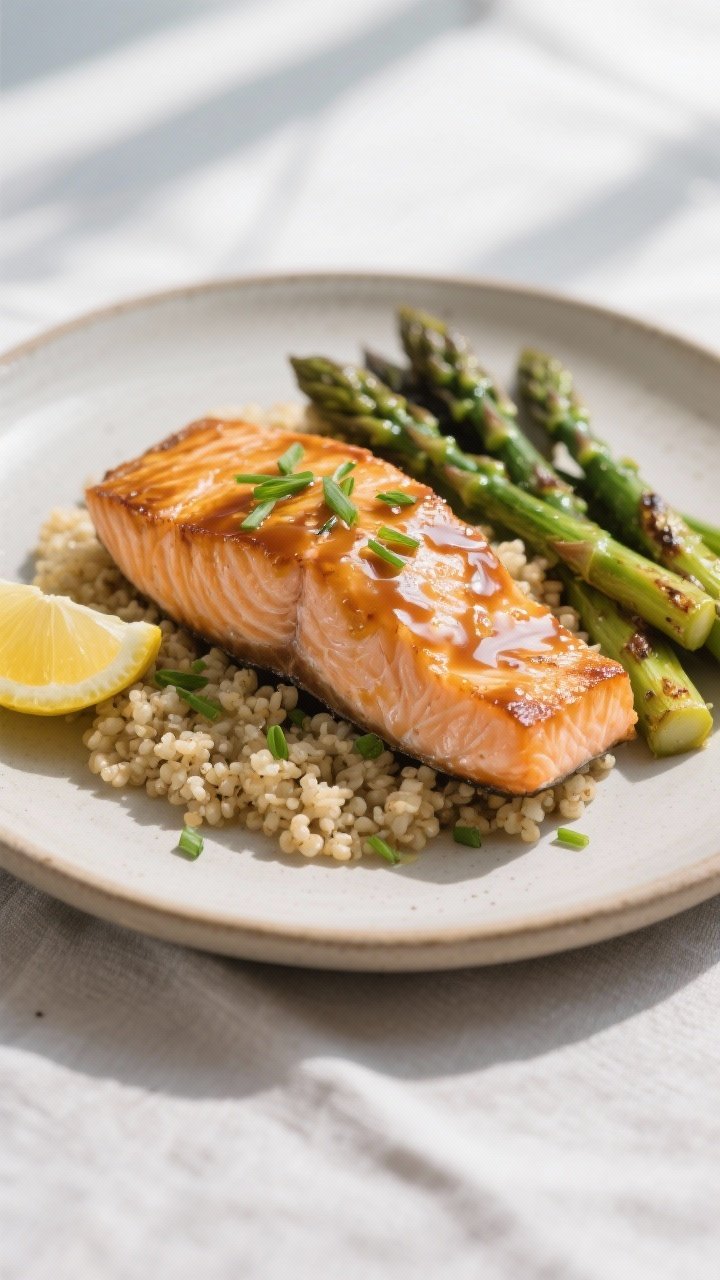
- Heat the oven: Preheat to 425°F (220°C). Line a baking sheet with parchment or foil for easy cleanup.
- Pat the salmon dry: Use paper towels to remove surface moisture.
This helps the glaze cling and encourages light caramelization.
- Season the fillets: Place salmon on the prepared sheet, skin-side down if using skin-on. Sprinkle with salt and pepper.
- Mix the glaze: In a small bowl, stir together Dijon, whole-grain mustard, maple syrup, lemon juice, olive oil, soy sauce, garlic, paprika, and red pepper flakes until smooth.
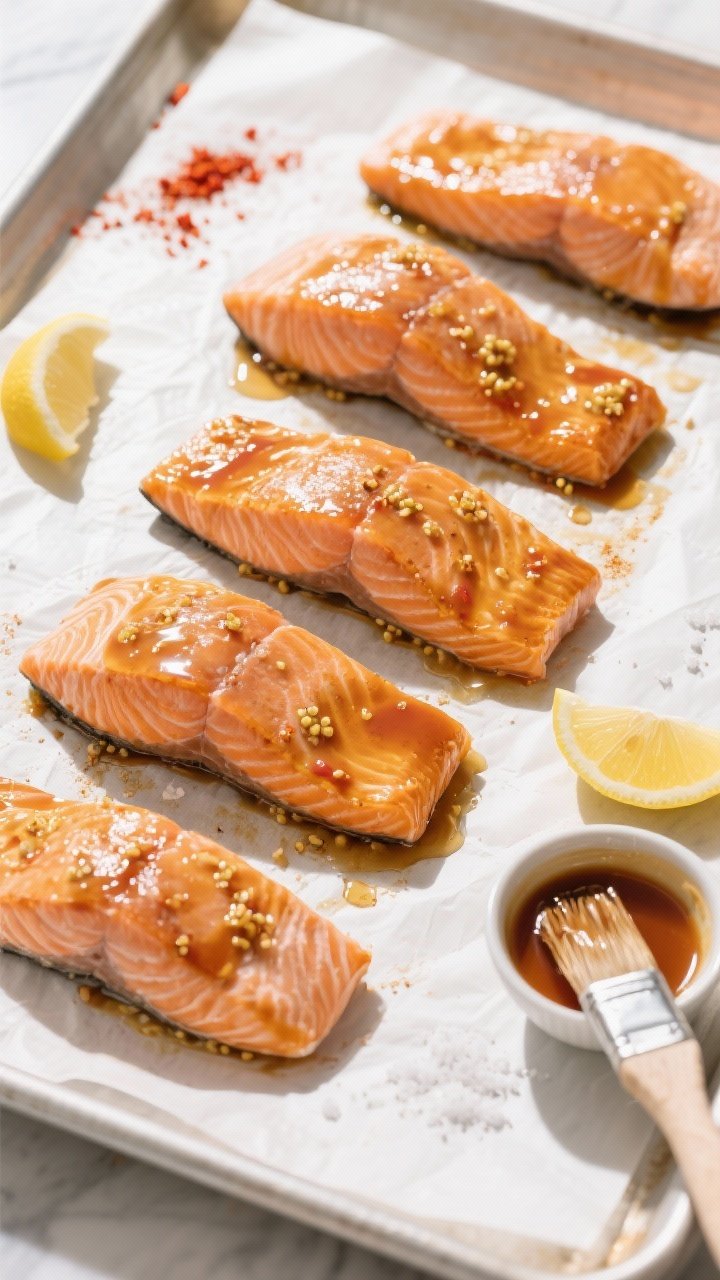
- Glaze generously: Spoon the mixture over the salmon, coating the tops and sides. Reserve a tablespoon or two to brush on after cooking if you like a glossy finish.
- Bake: Cook for 10–14 minutes, depending on thickness.
Salmon is done when it flakes easily with a fork and reaches 125–130°F for medium (or up to 140°F if you prefer more well-done).
- Optional broil: For extra color, switch to broil for the last 1–2 minutes. Watch closely to avoid burning the glaze.
- Rest and finish: Let the salmon rest for 3 minutes. Brush with reserved glaze if using, squeeze with lemon, and sprinkle with herbs.
- Serve: Pair with roasted asparagus, green beans, quinoa, brown rice, or a simple arugula salad.
How to Store
- Refrigerate: Cool completely, then store in an airtight container for up to 3 days.
- Reheat gently: Warm in a 275°F (135°C) oven for 10–12 minutes or microwave at 50% power in short bursts.
Avoid high heat to prevent drying.
- Freeze: Wrap individual portions tightly and freeze for up to 2 months. Thaw overnight in the fridge before reheating.
- Use leftovers smartly: Flake into salads, grain bowls, wraps, or scrambled eggs for a quick protein boost.
Why This is Good for You
- Omega-3 fats: Salmon is rich in EPA and DHA, which support heart health and brain function.
- High-quality protein: Each serving delivers satisfying protein to help keep you full and support muscle health.
- Simple, whole ingredients: Maple syrup and mustard add flavor without heavy sauces or additives.
- Balanced plate, easy: Add a vegetable and a whole grain, and you’ve got a nutrient-dense meal with fiber, vitamins, and minerals.
Common Mistakes to Avoid
- Overcooking: Salmon turns dry quickly. Start checking a few minutes early and aim for a slightly translucent center.
- Skipping the dry-off step: Moisture on the surface prevents browning and dilutes the glaze.
- Using pancake syrup: Choose pure maple syrup for clean flavor.
Imitation syrups can taste flat and overly sweet.
- Under-seasoning: Salt brings out the richness of the fish and balances the sweetness. Season the fish before glazing.
- Neglecting pan prep: Without parchment or greased foil, the glaze can stick and burn, making cleanup frustrating.
Recipe Variations
- Sheet-pan dinner: Add broccoli florets or green beans tossed with olive oil and salt to the same pan. Start the veggies 10 minutes earlier, then add the salmon.
- Grilled version: Grill over medium-high heat, skin-side down, for 6–8 minutes, then flip for 1–2 minutes.
Brush with glaze during the last few minutes.
- Air fryer: Cook at 390°F (200°C) for 7–10 minutes, depending on thickness. Line the basket with foil for easier cleanup.
- Spicy twist: Add a teaspoon of sriracha or a pinch of cayenne to the glaze.
- Herb-forward: Mix in chopped fresh dill or tarragon to the glaze and finish with extra herbs on top.
- Whole side of salmon: Use a 1.5–2 pound fillet, spread the glaze, and bake at 400°F (205°C) for 15–20 minutes.
- Mustard swap: Use hot English mustard for more punch, or honey mustard for a milder profile.
FAQ
Can I use frozen salmon?
Yes. Thaw it in the refrigerator overnight or under cold running water in its packaging.
Pat it very dry before seasoning and glazing, since frozen fish tends to hold more moisture.
What if I don’t like Dijon mustard?
You can use yellow mustard for a milder taste or grainy mustard for texture. If you want less tang, reduce the mustard by a tablespoon and add a bit more maple syrup.
How do I know when the salmon is done?
Look for flakes that separate easily with a fork and a slightly translucent center. A quick-read thermometer should read around 125–130°F for medium.
Can I make the glaze ahead?
Absolutely.
Mix it up to 3 days in advance and keep it in an airtight container in the fridge. Give it a quick stir before using.
Is there a good substitute for maple syrup?
Honey works well and gives a thicker, slightly floral sweetness. You can also use brown sugar in a pinch, but the texture will be less glossy.
What sides pair best with this?
Try roasted asparagus, sautéed green beans, garlicky broccoli, lemony couscous, wild rice, or a simple baby arugula salad with olive oil and lemon.
Do I need to remove the skin?
No.
Cooking with the skin on helps keep the fillet moist and makes it easier to lift from the pan. You can peel the skin off easily after cooking if you prefer.
Can I make it dairy-free and gluten-free?
Yes. The recipe is naturally dairy-free.
For gluten-free, use tamari or skip the soy sauce entirely.
How can I prevent a strong fish smell?
Buy the freshest salmon you can and cook it promptly. A quick squeeze of lemon before serving helps keep flavors bright and clean.
Wrapping Up
Maple-Mustard Salmon Fillets deliver big flavor with almost no effort. The glaze is simple, the cook time is short, and the results are consistently tender and satisfying.
Keep this one in your weeknight rotation, and dress it up with herbs, veggies, or grains to match whatever you have on hand. It’s a fuss-free way to make a wholesome, memorable meal any night of the week.
Printable Recipe Card
Want just the essential recipe details without scrolling through the article? Get our printable recipe card with just the ingredients and instructions.