
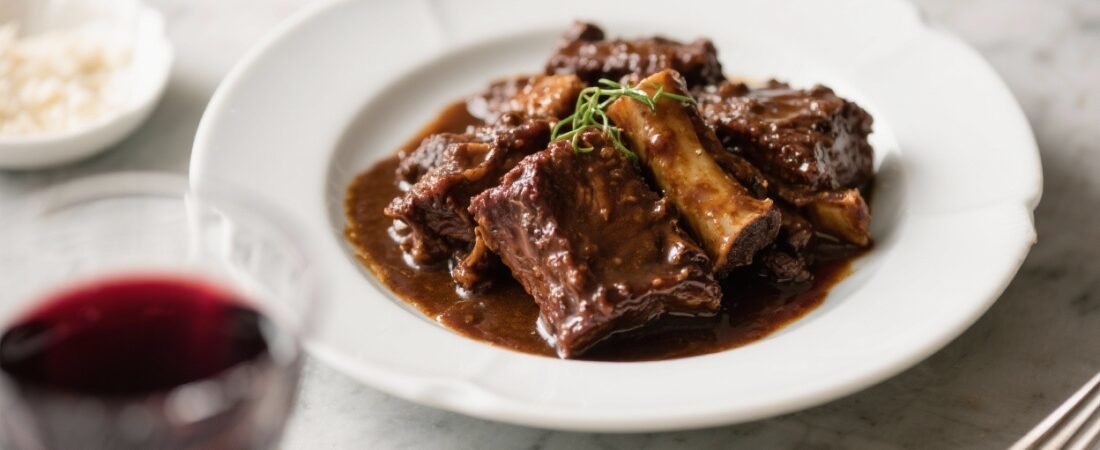
There’s something comforting about a pot of short ribs slowly braising away, filling the home with warmth and rich, savory aromas. This recipe is simple in spirit: good beef, a sturdy red wine, and time. The result is tender, spoon-ready meat and a glossy sauce you’ll want to pour over everything.
Whether it’s a relaxed weekend dinner or a special meal, these ribs never disappoint. Serve them with mashed potatoes, polenta, or buttered noodles and watch plates come back clean.
What Makes This Special
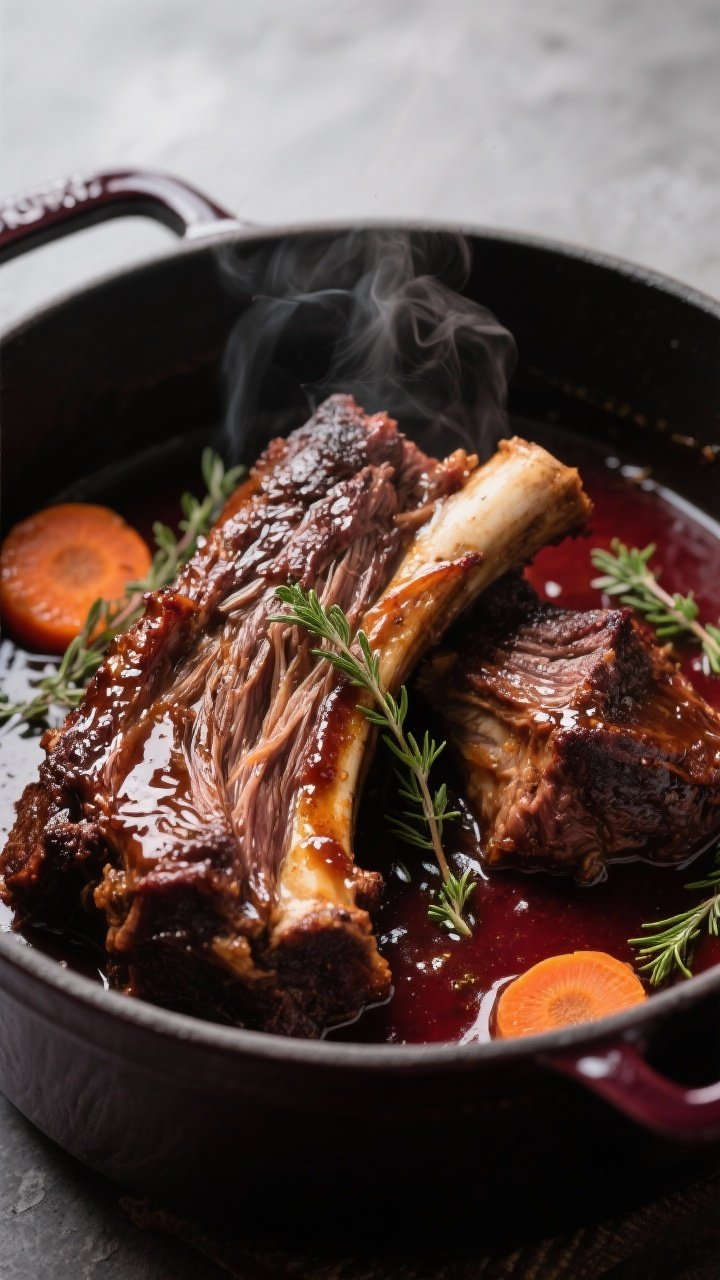
Short ribs thrive with low-and-slow cooking, and red wine gives them depth and balance. The braise builds layers: caramelized meat, sweet-savory vegetables, and herbaceous notes from thyme and bay.
As the wine reduces, it blends with beef stock to create a silky, restaurant-worthy sauce. The best part? Most of the work is hands-off, letting the oven do the heavy lifting while you relax.
What You’ll Need
- Beef short ribs: 4–5 pounds, bone-in, English-cut
- Kosher salt and freshly ground black pepper: for seasoning
- All-purpose flour: 2 tablespoons, for light dredging (optional)
- Olive oil: 2–3 tablespoons
- Yellow onions: 2 medium, chopped
- Carrots: 3 medium, peeled and chopped
- Celery: 2 stalks, chopped
- Garlic: 5–6 cloves, smashed
- Tomato paste: 2 tablespoons
- Dry red wine: 2 cups (Cabernet Sauvignon, Merlot, or a Côtes du Rhône)
- Beef stock: 2–3 cups, low-sodium
- Fresh thyme: 6–8 sprigs
- Bay leaves: 2
- Balsamic vinegar: 1 tablespoon (optional, for balance)
- Unsalted butter: 1–2 tablespoons (optional, to finish the sauce)
- Fresh parsley: chopped, for garnish
Instructions
- Prep and season: Pat the short ribs dry.
Season generously with salt and pepper on all sides. If you like a slightly thicker sauce, lightly dredge the ribs in flour, shaking off excess.
- Sear the ribs: Heat a large Dutch oven over medium-high heat and add olive oil. Sear the ribs in batches, 3–4 minutes per side, until deeply browned.
Don’t crowd the pot. Transfer to a plate.
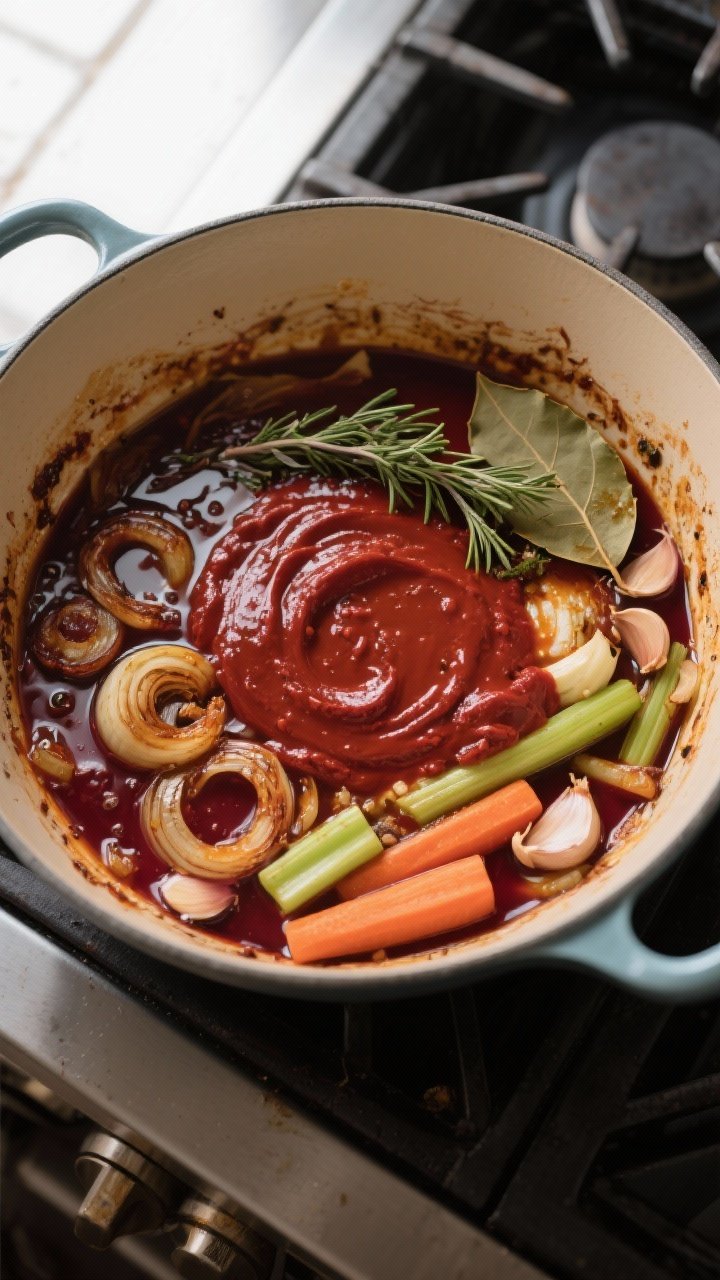
- Build the base: Reduce heat to medium. Add onions, carrots, and celery with a pinch of salt.
Cook 6–8 minutes, stirring, until softened and lightly caramelized. Add the garlic and cook 1 minute more.
- Tomato paste and fond: Stir in tomato paste and cook 2 minutes to darken. Scrape up the browned bits from the bottom of the pot—those bits are flavor gold.
- Deglaze with wine: Pour in the red wine.
Simmer 5–7 minutes, reducing by about half to concentrate the flavor and cook off alcohol.
- Add stock and herbs: Return the ribs and any juices to the pot. Add enough beef stock to come about three-quarters of the way up the ribs. Tuck in thyme and bay leaves.
- Braise low and slow: Bring to a gentle simmer.
Cover and transfer to a 325°F (165°C) oven. Cook 2.5–3 hours, turning the ribs once halfway, until the meat is very tender and nearly falling off the bone.
- Skim and finish: Remove ribs to a plate and tent with foil. Skim excess fat from the surface of the braising liquid.
If you want a thicker sauce, simmer on the stovetop 10–15 minutes to reduce. Stir in balsamic vinegar for brightness and whisk in butter for a glossy finish. Adjust salt and pepper.
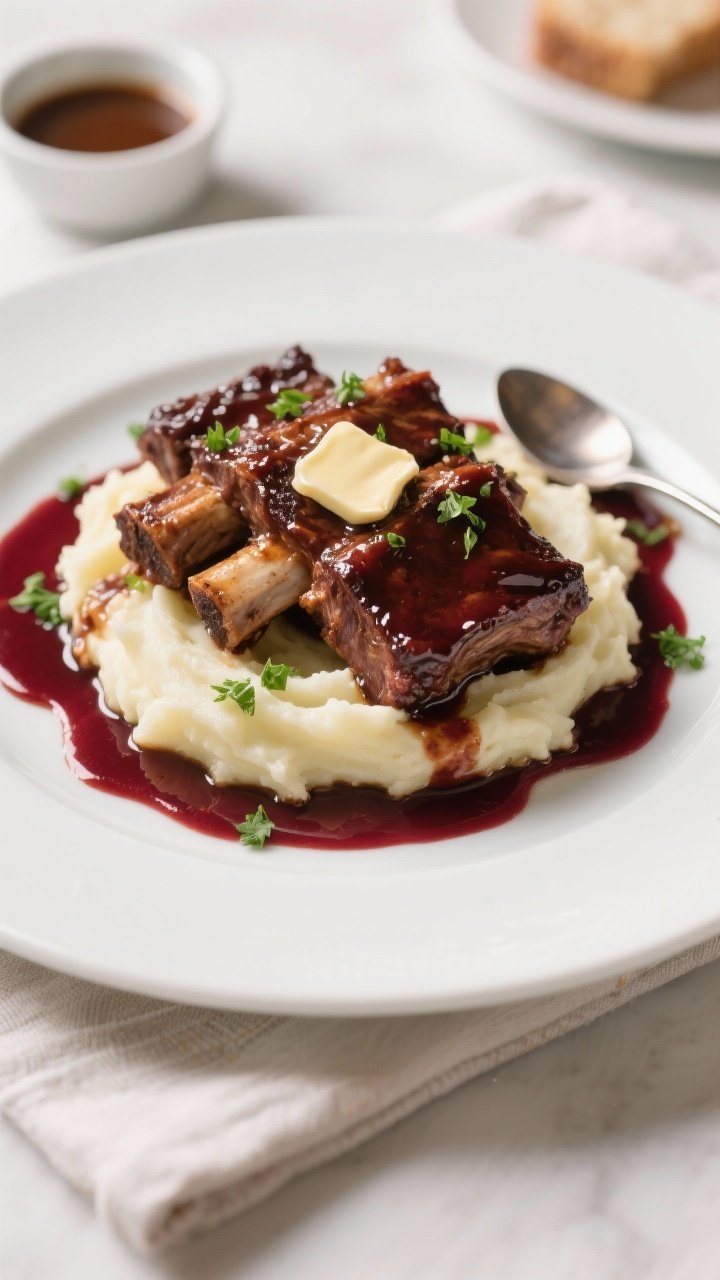
- Serve: Nestle ribs back into the sauce or plate them over mashed potatoes, polenta, or noodles.
Spoon sauce over the top and finish with chopped parsley.
Keeping It Fresh
Short ribs actually taste better the next day. As they rest, flavors meld and the sauce thickens. If you can, chill the pot overnight.
The fat will solidify on top, making it easy to remove for a cleaner, lighter sauce. Reheat gently over low heat or in a 300°F oven, adding a splash of stock if the sauce gets too thick. Leftovers keep well for 4 days in the fridge and freeze nicely for up to 3 months.
Benefits of This Recipe
- Forgiving and flexible: The braise is hard to mess up.
Time and low heat do the work.
- Restaurant results at home: Deep, layered flavors and a silky sauce with simple ingredients.
- Make-ahead friendly: Ideal for entertaining or meal prep, with easy reheating.
- One-pot convenience: Less cleanup, more flavor.
- Adaptable sides: Pairs with potatoes, grains, or roasted vegetables.
Pitfalls to Watch Out For
- Skipping the sear: Browning builds flavor. Don’t rush it.
- Too much liquid: The ribs should be mostly submerged but not drowning. Overly watery braises dilute flavor.
- Undercooking: If the meat isn’t tender, it needs more time.
Keep braising until it yields easily with a fork.
- Overly salty stock: Use low-sodium stock and season at the end to avoid a salty sauce.
- Boiling instead of simmering: A gentle simmer keeps the meat moist and tender.
Recipe Variations
- Mushroom boost: Add 8 ounces of cremini or porcini mushrooms with the vegetables for earthy depth.
- Herb swap: Try rosemary instead of thyme for a piney note, or add a strip of orange peel for brightness.
- Tomato-rich: Add a 14-ounce can of crushed tomatoes with the wine for a more robust, ragu-like sauce.
- Beer-braised: Replace half the wine with a malty brown ale or stout for a different kind of richness.
- Spice it up: Add a pinch of red pepper flakes or a teaspoon of smoked paprika for gentle heat and smokiness.
- Pressure cooker: Sear in the Instant Pot, then cook on High Pressure for 45–50 minutes with natural release. Reduce the sauce on sauté if needed.
- Boneless option: Use boneless short ribs and reduce cook time slightly; start checking for tenderness around 2 hours.
FAQ
What kind of red wine should I use?
Choose a dry, full-bodied red like Cabernet Sauvignon, Merlot, Syrah, or a Côtes du Rhône. Use something you’d enjoy drinking, but it doesn’t need to be expensive.
Can I make this ahead?
Yes.
In fact, it improves overnight. Chill, remove solidified fat, reheat gently, and adjust seasoning before serving.
Do I need to flour the ribs?
No. Flour helps the sauce thicken slightly and promotes browning, but you can skip it if you prefer a gluten-free or lighter approach.
Reduce the sauce a bit more at the end to reach the same body.
How do I prevent greasy sauce?
Skim fat after braising, or chill overnight and remove the solid fat layer. Trimming excess fat from the ribs before cooking also helps.
What if I don’t have a Dutch oven?
Any heavy, oven-safe pot with a tight lid works. Alternatively, sear on the stovetop and transfer everything to a covered roasting pan or a slow cooker.
How can I thicken the sauce?
Reduce it on the stovetop until it coats the back of a spoon.
For extra body, whisk in a tablespoon of butter or a cornstarch slurry (1 teaspoon cornstarch mixed with 2 teaspoons cold water).
What should I serve with it?
Mashed potatoes, creamy polenta, buttered egg noodles, or crusty bread are classic. Roasted carrots, green beans, or a crisp salad make great sides.
Can I cook this in a slow cooker?
Yes. Sear the ribs and sauté the vegetables first, then transfer to a slow cooker with wine, stock, and herbs.
Cook on Low for 8–9 hours or High for 5–6 hours.
Is boneless as flavorful as bone-in?
Bone-in delivers slightly deeper flavor and a richer sauce, but boneless is still excellent and cooks a bit faster.
How do I store and reheat leftovers?
Refrigerate in an airtight container for up to 4 days or freeze for 3 months. Reheat gently on the stove over low heat or covered in a 300°F oven until warmed through.
Wrapping Up
Slow-braised short ribs with red wine are the kind of meal that makes a night feel special with minimal fuss. A little patience turns simple ingredients into a tender, glossy, deeply flavored dish.
Keep the technique in your back pocket, vary the herbs or add mushrooms, and you’ve got a reliable showstopper any time you need one. Light a few candles, ladle on the sauce, and enjoy the kind of comfort only a slow braise can bring.
Printable Recipe Card
Want just the essential recipe details without scrolling through the article? Get our printable recipe card with just the ingredients and instructions.